
Nigeria Woos European Investors for One Million Hectare Tree Crops Expansion
FG is courting European investors to fund expansion of about one million hectares of cocoa, oil palm, cashew and rubber estates.
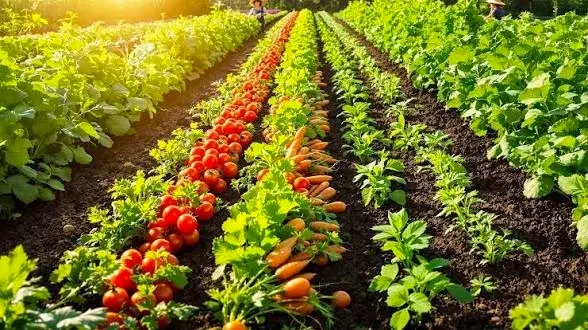
Nigeria is taking one of its largest agricultural expansion bets to European capital. The federal government is actively courting European investors to fund the expansion of about one million hectares of tree crops — cocoa, oil palm, cashew, rubber and allied species — inside a programme that aims to convert Nigeria's ageing, low-yield tree-crop estate into a modernised, export-competitive one.
The pitch lands in a moment the numbers finally justify capital. Cocoa prices have spent the last two years near historic highs as West African supply — Ghana and Côte d'Ivoire produce roughly two-thirds of the world's cocoa — lost farms to disease, ageing trees and weather stress. Nigeria, historically the world's second-largest producer and now a distant player behind Côte d'Ivoire, Ghana and Cameroon, holds the land, the climate and the labour to reclaim share if capital funds replanting at scale. A one-million-hectare expansion is the scale at which that reclamation becomes an export-economy event rather than a farming story.
Why tree crops are a different investment case
Tree crops test capital's patience differently from any other agricultural category. A cocoa or oil palm planting takes three to five years to first harvest and seven to ten to full yield, making the investment cycle closer to plantations than to grain farming — and capital has historically declined the wait in Nigeria because land tenure, security and export logistics were unresolved. What has changed is the price environment: with cocoa near record levels, the future-value mathematics of new plantings clears every realistic discount rate, if the grower can hold the plantation through establishment.
The European angle follows the value chain. European food and confectionery companies — the world's largest chocolate buyers — are facing both price pressure and the EU's deforestation regulation, which requires certified, traceable, deforestation-free supply chains for cocoa, palm oil, rubber and coffee entering the bloc from the end of this decade. That regulatory wall converts European buyers from passive price-takers into active supply-chain investors: the cheapest way to secure compliant future volume is to fund the plantations that produce it. Nigeria's courtship of European capital is aimed at exactly that pocket of money.
What Nigeria brings and what it must fix
The asset side is real: land in the cocoa and oil-palm belts — Ondo, Osun, Edo, Cross River in the south; Ogun, Oyo and Kwara for various tree species — plus a generation of youth unemployment that a labour-intensive plantation economy can absorb, and the transport corridors to ports that already ship West African produce. The liabilities are equally known: land titling that makes investment-grade collateral impossible in most states, insecurity across rural belts that raises operating costs and insurance premiums, farmer cooperatives with governance gaps, and a logistics chain that leaves quality — and therefore price premiums — on the table.
The states that win this capital will be the ones that solve the interface: titled, mapped plantation land registers; security frameworks investors can price; outgrower schemes that make farmers shareholders rather than wage labourers; and traceability systems aligned with EU requirements from planting records upward. Capital follows paperwork in tree crops, and Nigeria's paperwork is the binding constraint.
The wider industrial logic
A successful one-million-hectare programme does something beyond farm output: it anchors processing. Cocoa grinding, palm oil refining, cashew processing and rubber primary manufacturing are the value-addition industries Nigeria has exported to its neighbours for lack of raw-material scale and reliability. Plantation scale is the upstream condition for downstream industry — and the jobs, foreign exchange and tax base that follow manufacturing are the real prize. Nigeria's non-oil export ambitions of the last five years have been priced on exactly this chain; the tree-crop push is the supply-side leg of the same strategy.
European capital, a price environment that finally pays for the wait, and a government willing to make the pitch: the ingredients for Nigeria's largest agribusiness expansion in a generation are assembled. The deciding variables are the unglamorous ones — titles, security, traceability — and they are in Nigerian hands. If those get fixed, the plantation economy's second act will pay for more than itself.
Up next
Nigeria, China Sign $30m Deal on Grassroots Development Projects
Nigeria and China signed a $30 million agreement funding community-level infrastructure and livelihoods projects outside the mega-project era.
More in Agriculture
See all
33 Million Nigerians Face Food Insecurity By 2027
Food security projections warn more than 33 million Nigerians will face acute food insecurity by mid-2027 amid harvest shortfalls and farm insecurity.

Cross River Plots 15,000 Tonne Coffee Weekend Plan
Cross River State targets 30 million coffee seedlings and 15,000 tonnes annual output with 6,000 hectares of plantations across three LGAs.

North-East Poultry Farmers Warn Sector Near Collapse
Poultry farmers in Borno, Yobe and Adamawa seeking government intervention as input costs threaten the North-East poultry sector with collapse.
About the author
Abena Ofori
Agribusiness Correspondent
Abena Ofori writes for BusinessPress.
More by Abena Ofori


