
Tinubu Seeks 7.7 Billion Dollar Loan, Replacing Bigger Plan
Tinubu asked lawmakers to approve a revised $7.7 billion external borrowing plan for the 2026 budget, replacing a $20.52 billion request.
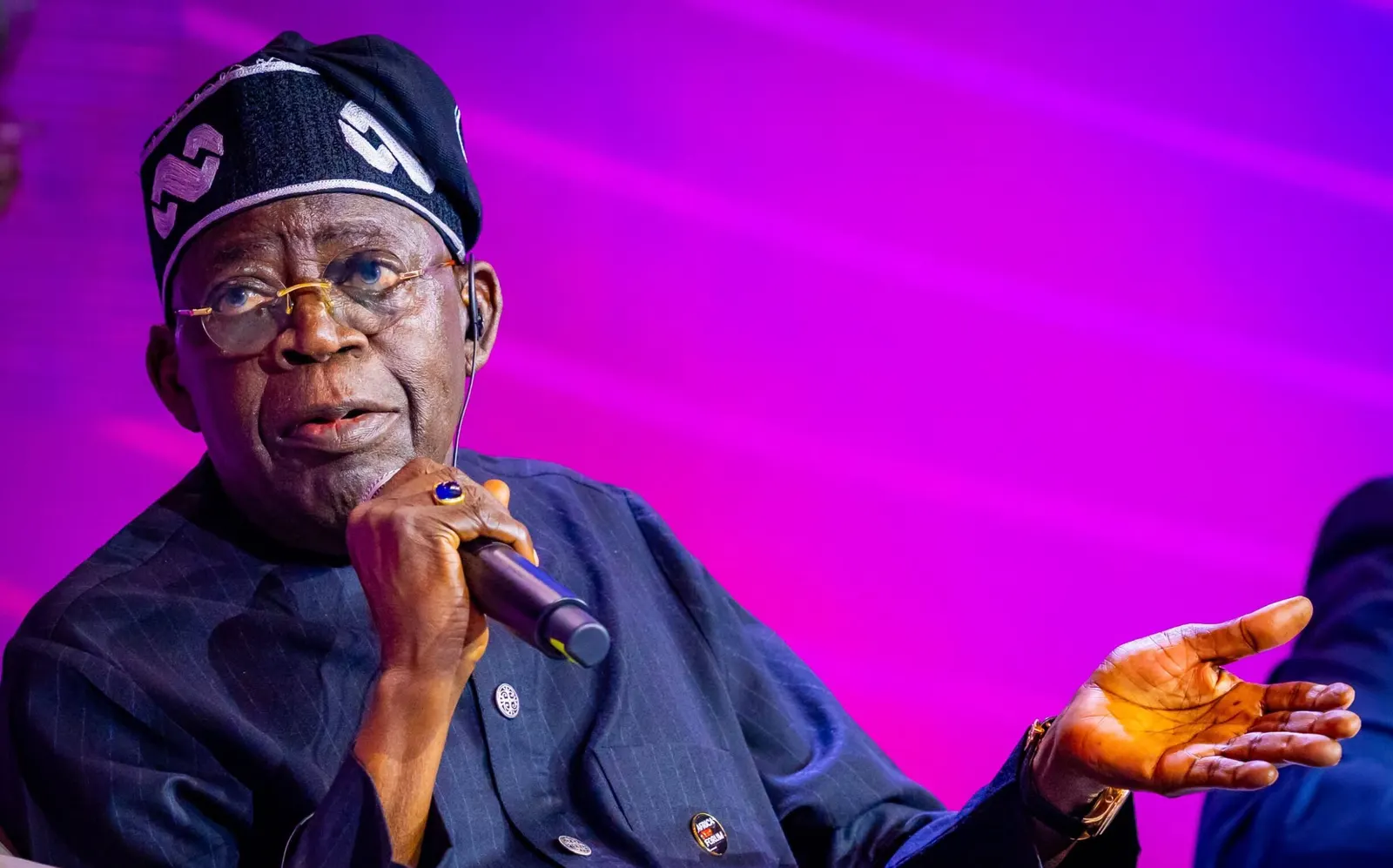
President Bola Tinubu has asked lawmakers to approve a new $7.7 billion external borrowing plan to fund projects in the 2026 budget, replacing a much larger $20.52 billion request that had been on the table for months — a revision that reveals as much about Nigeria's debt strategy as about what the government thinks global markets will now lend.
Senate President Godswill Akpabio disclosed the revised request on the chamber floor, saying it supersedes the earlier proposal to borrow $20.52 billion externally because the government had restructured the plan to reflect funding from multiple sources and provide greater detail on its financing structure. The government, he added, would "explore the available options and secure the best possible terms under a willing-seller, willing-buyer arrangement" — language that suggests multi-lateral, bilateral and market windows are all in play.
Where the borrowing fits in the 2026 budget
The revised borrowing sits inside a 2026 budget that provides for N29.2 trillion in total borrowing to fund a N31.4 trillion deficit, including N18.4 trillion from domestic markets and N10.79 trillion externally. The replacement of the previous plan therefore does not change the deficit arithmetic; it changes the composition of how the shortfall is assembled, swapping a large single foreign package for a smaller external tranche that presumably leans harder on concessional windows and domestically mobilised funds.
The practical consequence is a lower dollar-debt ceiling in the year's external programme. If the full $7.7 billion is eventually drawn, total external new borrowings would be materially lower than the original request implied, easing concern in currency and bond markets that had treated the $20.52 billion figure — equivalent to several billion dollars of annual debt service — as a pressure point on the naira's stability. Debt-service costs in Nigeria have climbed to be among the largest single lines in the federal budget, and the exchange of external obligations for domestic ones shifts that burden into a market where the CBN can manage refinancing risk.
Domestic markets as the fallback
The revision is also a statement about what Chinese, multilateral and private lenders have been willing to write. The government's language about "multiple sources" and "willing-buyer" implies the country has been forced to assemble funds from smaller sources — World Bank programme lending, African Development Bank windows, bilateral deals and sukuk — rather than a single Eurobond-style programme. Nigeria's most recent dollar bond sales have been oversubscribed, but not at the terms the 2026 budget was written for, and the exchange-rate cost of servicing hard-currency debt has risen sharply since the naira floated.
The approval question in a changed Congress
The request lands in a National Assembly whose composition has just been reset by November's midterm election cycle. Revising down a borrowing request before submitting it is a classic move to smooth passage: smaller headline numbers are harder for senators to oppose, particularly when the request is presented as having replaced a proposal that had stalled under its own weight. Whether the incoming chamber moves quickly or demands deeper justification will determine whether Nigeria's 2026 external programme is approved in time to fund the projects attached to it.
Civil-society budget groups will still press the harder questions: what exactly the new borrowing funds, which projects it is attached to, and what the long-run debt-service outlook looks like for a country whose external debts already absorb a double-digit share of revenue. The Ministry of Finance has repeatedly argued that concessional sources dominate the external plan, with market-priced bonds as a minority; the new request gives those claims the chance to be tested against the actual financing structure.
Reading the signal for investors
For bond investors, the signal is twofold. A smaller external programme means less Eurobond supply competing with Nigerian sovereign paper that already trades wide, supporting the secondary market's recovery from its 2025 lows. It also shifts risk into the domestic fixed-income space, where the CBN's yield ceiling has been the binding constraint and where every extra naira of government issuance tightens the yield curve at its long end.
The deeper message is about sequencing. Borrowing abroad for a structural deficit has been the pattern Nigerian finance ministers inherited; swapping toward domestic financing while restructuring revenue — through tax reforms, the FX transparency and reform of fuel-subsidy structures — is a different fiscal philosophy. November's approval fight will reveal how far the National Assembly is willing to endorse that philosophy, and the answer will be one of the clearest markers yet of whether Nigeria's reform narrative can carry its own financing plan.
Up next
Gulf Equities Rally on Iran De-escalation Bets
Saudi Tadawul and Qatari stocks rose as investors bet the US midterm sweep reduces the risk of a wider Iran conflict.
More in Economy
See allNigeria, Benin and Cameroon Turn to Afreximbank to Modernise Cross-Border Trade Posts
Nigeria, Benin and Cameroon have aligned with Afreximbank on a border modernisation programme designed to cut delays at key crossing points and lift trade among the three neighbours.
EU Says Nigeria's Poor May Be World's Largest, Commits E45m in Aid
The European Union's ambassador to Nigeria, Gautier Mignot, says the country probably has the world's largest number of people living below the poverty threshold, and announced nearly E45 million in humanitarian assistance for 2026 plus E20 million in defence support.
Tinubu, Atiku Clash Over Competing Plans to Cut Petrol Prices
President Tinubu's administration and opposition leader Atiku Abubakar have advanced rival plans to lower petrol prices as Nigeria heads toward the 2027 election.
About the author
Tunde Balogun
Economics Correspondent
Tunde Balogun writes for BusinessPress.
More by Tunde Balogun


