Nigeria Rejects World Bank's .8 Billion Debt-Service Finding as Revenue Timing Dispute Deepens
The Finance Ministry says the World Bank's finding that debt interest reached 124% of federal revenue in H1 2026 excludes unremitted agency revenue and counts state loans, arguing the full-year ratio fell below 60% in 2025.
Nigeria's Finance Ministry has rejected a World Bank finding that the country's debt-interest payments reached $5.8 billion in the first half of 2026, equivalent to 124 per cent of federal revenue, arguing that the comparison is distorted by revenue timing and by how state loans are counted.
In a statement issued on October 18, the ministry said the World Bank's October 2026 Nigeria Development Update compared federal interest payments against revenue that excluded earnings already generated by government agencies and enterprises but not yet remitted to the Treasury. It also said the debt figure included external loans taken by states but serviced by the federal government.
The numbers behind the dispute
The ministry argued that first-half revenue is an unreliable measure of annual fiscal capacity because several taxes are collected on statutory schedules concentrated later in the year. Federal revenue rose 72 per cent year on year, from $2.71 billion in the first half of 2025 to $4.67 billion in the same period of 2026, it said, while interest payments rose 38 per cent from $4.22 billion to $5.80 billion.
On the ministry's account, the interest-to-revenue ratio actually declined by 32 percentage points, from 156 per cent in the first half of 2025 to 124 per cent in the first half of 2026, and the gap between interest and revenue narrowed from $1.51 billion to $1.13 billion. Nigeria's full-year debt-service-to-revenue ratio fell below 60 per cent in 2025, down from 97 per cent before President Bola Tinubu's reforms, the statement said.
Why the framing matters
The dispute is not merely technical. Debt-service ratios are closely watched by ratings agencies, bond investors and multilateral lenders because they signal the fiscal room a government has to absorb shocks or fund development. A 124 per cent ratio, if treated as structural, implies Nigeria must borrow to pay interest — an unsustainable arithmetic. A declining trend that remains below 60 per cent on a full-year basis tells a very different story about solvency.
The ministry's methodological points have substance. Revenue in Nigeria is genuinely back-loaded: company income tax, VAT and several oil-linked receipts do not accrue evenly across the year, so a first-half snapshot can overstate the burden relative to a full-year measure. And attributing state external debt service to the federal government inflates the numerator relative to the federally controlled revenue base. Both adjustments are defensible.
Where both sides agree
Comfortably, President Tinubu welcomed the report even as his ministry disputed one of its headline ratios, citing World Bank findings that internally generated revenue grew in real terms in 31 of 35 states and that Nigeria's public debt is projected to decline from 40.0 per cent of GDP in 2025 to 38.1 per cent in 2026. That selective embrace reflects the political value of the report's broader message: that the removal of the petrol subsidy helped stabilise the economy.
The episode also illustrates a challenge facing Nigeria's fiscal communications. As the country pursues a tax-to-GDP ratio target of at least 18 per cent within three years, investors will scrutinise whether revenue growth is real and durable or a function of timing, one-off receipts and exchange-rate effects. The debt-service debate will recur with every update, and the ministry's best response is not to contest the framing alone but to demonstrate a sustained decline in interest relative to full-year revenue.
The underlying fiscal pressure is real regardless of how the ratio is framed. Interest payments of $5.80 billion in six months consume a large share of the revenue the federal government controls directly, and the ministry's own figures show interest still exceeding federal revenue in the first half. Closing that gap — which the ministry says has already narrowed by nearly $400 million year on year — is the metric that will determine fiscal credibility over the next two years.
Three variables will shape the outcome. First, oil receipts, which remain elevated because of conflict-driven prices but are volatile. Second, non-oil revenue, where the 2025 tax laws and improved administration are meant to deliver structural gains. Third, exchange-rate stability, because a weaker naira mechanically increases the local-currency cost of servicing dollar-denominated debt even when the underlying obligation is unchanged.
For bondholders and lenders, the most useful indicator is not any single quarterly ratio but the trajectory of interest as a share of full-year revenue, measured consistently across years. On that basis, the ministry is asking to be judged on a trend it says is improving. The World Bank's update, read alongside the rebuttal, provides both the warning and the government's response — and leaves markets to decide which is the better guide to Nigeria's fiscal direction.
Up next
NIA Challenges Insurers to Convert N1.079 Trillion Recapitalisation Into Better Claims Service
The Nigerian Insurers Association says the industry's N1.079 trillion recapitalisation must deliver faster claims settlement, stronger underwriting and wider penetration, warning that capital without service improvement has limited value.
More in Economy
See all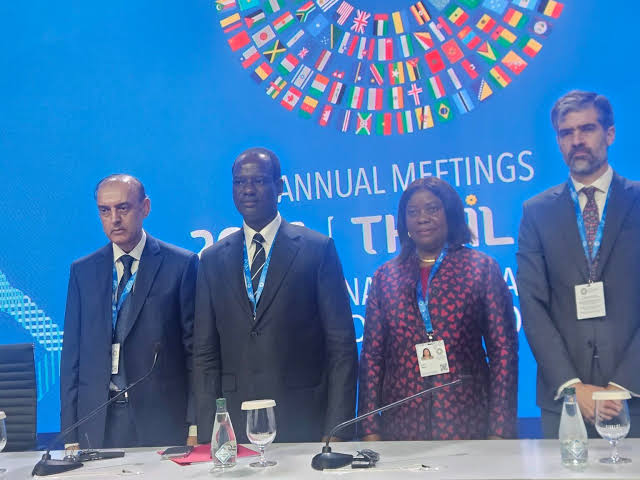
G-24 Warns Developing Nations Pay $500bn More for Debt Than Rich Countries
G-24 chair Taiwo Oyedele said developing countries pay about $500 billion more for debt than developed economies, urging cheaper IMF and World Bank financing.

FAAC Distributions Rise 4% to N2.4 Trillion in October as Statutory Revenue Rebounds
FAAC distributed N2.4 trillion among Nigeria's three tiers of government in October 2026, up 4 per cent month-on-month, as statutory revenue rose 7 per cent and the 13% derivation fund jumped 28 per cent.
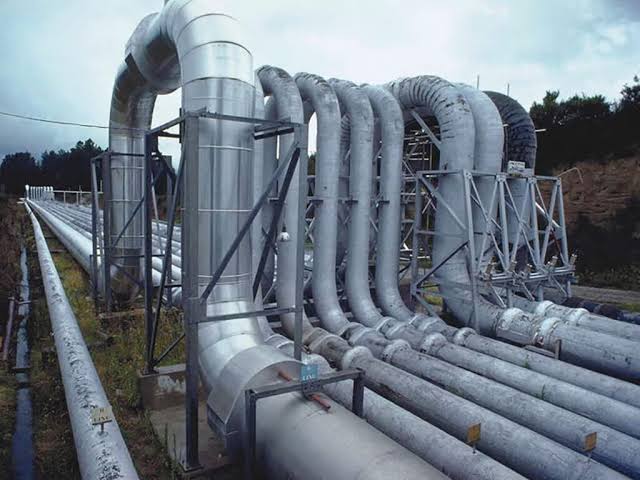
Nigeria's Gas Boom Faces a Bankability Test Beyond LNG Exports
TotalEnergies and AMNI's Ima gas field will feed Nigeria LNG rather than domestic power, as executives warn that export economics keep outpacing gas-to-power and industrial demand.
About the author
Tunde Balogun
Economics Correspondent
Tunde Balogun writes for BusinessPress.
More by Tunde Balogun