
Wall Street’s Worst Week Since April: Retail Traders Sold More Than Any Day of the Pandemic
An 1,800-point Dow plunge erased the post-midterm rally, the Nasdaq confirmed a correction and the Magnificent Seven shed $1 trillion in a day as the AI trade met a hostile Congress.
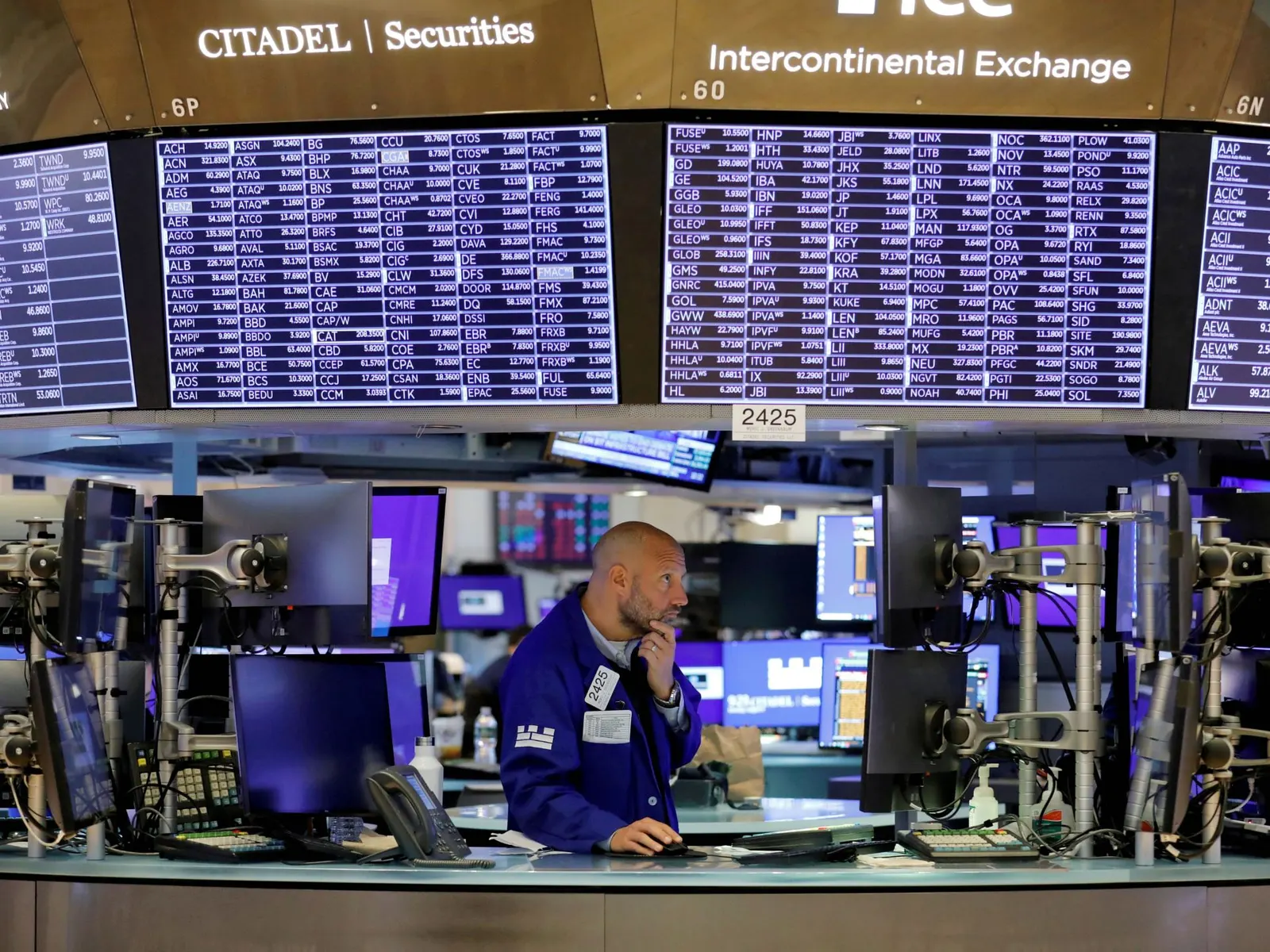
Wall Street limps into the new trading week after its ugliest stretch since spring: the Dow Jones Industrial Average soared 1,500 points on Wednesday, the day after the US midterm elections, then erased every point of it on Thursday with an 1,800-point plunge — the worst single sell-off since April 2025 — as fears that a Democratic Congress will slow the AI data-centre buildout collided with the market's most crowded trade.
The damage was concentrated where the market's wealth is stored. The Nasdaq Composite confirmed a correction, closing nearly 12 per cent below its October 6 record, and the single-day pillaging left the Magnificent Seven collectively about $1 trillion poorer, with Nvidia alone surrendering roughly $440 billion of market value. The S&P 500's technology sector sank 7.3 per cent and the Philadelphia Semiconductor index tumbled more than 12 per cent — both the biggest one-day drops in more than six years, Reuters reported.
What the tape says about capitulation
The most telling data point is retail. Thursday marked the biggest day of individual-investor selling since the Covid pandemic, according to Vanda Research, meaning the "buy the dip" constituency that has circulated cash through every drawdown for two years finally stepped back. Options positioning agrees: the CBOE put/call ratio doubled from its 0.6 average to 1.2, an extreme of bearishness that strategists treat as a contrarian signal — but one that, as Freedom Capital Markets' Jay Woods put it, needs several more sessions of selling before a bottom can be called. The VIX ended Friday around 24, still short of the 30 handle Woods wants to see for a true flush.
The scoreboard after the smoke: the S&P 500 finished the week down 2.7 per cent at 7,376.86, with the Dow closing Friday at 51,285.73, down 0.46 per cent on the day even as the S&P scraped out a 0.31 per cent gain. The index is essentially where it sat in July — a four-year bull market that has round-tripped its autumn gains.
Politics entered the AI trade
The trigger was electoral. Democrats routed Republicans and won control of Congress, and governors who support restrictions on data-centre development won big in states including Texas and Ohio, while local ballot measures that could slow AI investment and construction passed across the country. For chipmakers, equipment suppliers and utilities with brimming order books, the elections raised a question no earnings report had: whether the buildout's permitting and power assumptions survive a hostile legislature.
Washington adds a second uncertainty — spending on the Iran war, a fight that could yet produce a government shutdown before year-end — and a third: monetary policy. Friday's blowout payrolls report showed wages still growing, cementing expectations that the Federal Reserve will hike in December, an uncomfortable backdrop for a deleveraging equity market.
The bargain-hunting math
The bull case assembling in the wreckage is arithmetic, not sentiment. Third-quarter earnings are on track to grow about 31 per cent year on year once the season closes, according to FactSet, and the gains have broadened well beyond the seven mega-caps that dominated the rally. Strategists flag semiconductors — Micron and Nvidia among them — as the punished names on shopping lists, while money that left equities parked itself in healthcare and consumer staples, sectors now so crowded they look overbought in their own right.
The coming week tests the thesis with data rather than narrative: October CPI arrives Tuesday with consensus near 3.7-3.9 per cent year on year, PPI follows Friday, and the earnings docket carries the AI buildout's most credible witnesses — CoreWeave and Nebius among the neoclouds, Cisco and Applied Materials among the infrastructure suppliers. Their guidance, and the market's reaction to it, will decide whether last week was capitulation or intermission.
The frontier-market echo
For Nigerian and African investors, the rout transmits through three channels: portfolio flows to frontier equities that track global risk appetite, the dollar strength that hawkish Fed expectations sustain, and the technology sector's read across to local fintech valuations. A stabilising Wall Street is unambiguously good news for the week ahead everywhere else.
Up next
Bitcoin ETFs Suffer Worst Outflows Since June as BTC Tests Its 200-Day Average
Spot funds shed $1.28 billion in a week, more than $1 billion of leveraged positions were liquidated and ether closed below its 200-day moving average for the first time since August.
More in Markets
See all
Analysts See NGX Crossing N200 Trillion by December as Refinery Listing Looms
From N161.59 trillion after a losing week, capital-market analysts project a year-end push past N200 trillion on the Dangote Petroleum Refinery listing and returns above 57 per cent.

Profits Up, Prices Down: The NGX Sell-Off Just Made Some Blue Chips Genuinely Cheaper
Nine-month results covering roughly 90 per cent of the exchange’s value show names like MTN Nigeria earning 55 per cent more while costing less — and a screen for telling cheap from falling.

Murban Crude Jumps 3% Above Brent as Physical Market Defies Paper Slump
Gulf physical benchmark climbed to $99.17, some $1.70 over Brent futures, even as crude slid toward $96 on Iran-talk optimism and a 1.4m b/d surplus forecast.
About the author
Kwame Mensah
Markets Correspondent
Kwame Mensah writes for BusinessPress.
More by Kwame Mensah


