Power Minister Rules Out Electricity Tariff Increase, Targets 24-Hour Supply
Minister of Power Joseph Tegbe says there is no plan to raise electricity tariffs, insisting the focus is round-the-clock supply as the FG flags off 17.7MW of mini-grids in Oyo State.
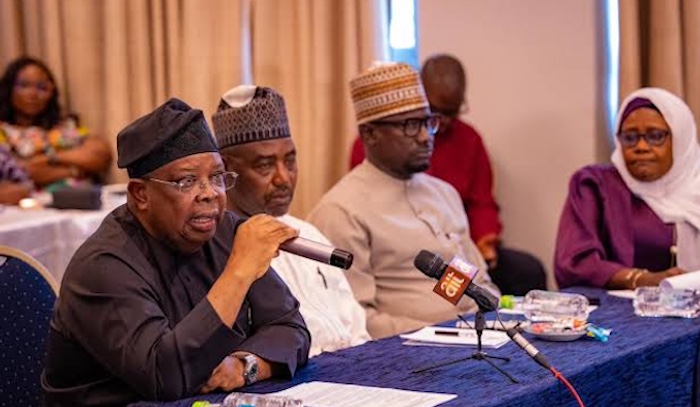
The Minister of Power, Joseph Tegbe, has ruled out any plan to raise electricity tariffs, insisting that the Federal Government is instead focused on delivering round-the-clock power as it expands decentralised generation across the country.
Speaking in Ibadan, Oyo State, at the groundbreaking ceremony for five interconnected mini-grid projects with a combined capacity of 17.7 megawatts, Tegbe urged Nigerians to disregard what he described as misinformation about an impending tariff review.
“I want to say this clearly and without ambiguity: there is no plan to increase electricity tariffs. What we are planning is a power sector that works around the clock. Our commitment is 24/7 power,” the minister said.
The statement was reported by several Nigerian media houses on Thursday, October 15, 2026, and places the government’s stated priority on improved supply rather than on a new pricing regime, at a time when the cost of electricity has remained a sensitive political issue.
Oyo Mini-Grids Signal Off-Grid Push
The five mini-grids flagged off in Oyo State form part of the government’s strategy to reach communities that the national grid does not serve reliably, using interconnected, smaller-scale generation and distribution systems rather than relying solely on large central plants.
Mini-grids, which combine local generation, often solar or hybrid, with a dedicated distribution network, have become a central plank of Nigeria’s electrification agenda because they can be deployed faster and closer to demand than grid extensions. For Oyo State, the 17.7 megawatts represent additional local capacity intended to support households, small businesses and public facilities in and around the state capital.
The ceremony underlined the government’s messaging that its focus is on widening access and improving reliability, even as it seeks to reassure consumers over pricing.
Tariff Question Remains Politically Charged
Electricity tariffs have been among the most politically sensitive prices in Nigeria since the removal of petrol subsidies and the broader macroeconomic reforms that pushed up the cost of living. The government and regulators had previously introduced cost-reflective adjustments, including a system of service-based tariff bands under which customers in higher-supply categories pay more.
Tegbe’s assurance is not the first. In July 2026, he had also said there was no immediate plan to increase tariffs, a position the ministry has repeated as it manages public expectations around the power sector.
The reiteration is significant for manufacturers and businesses, which have consistently cited energy costs, especially self-generated diesel and petrol power, as a drag on operating margins. Any expectation of a tariff increase can quickly feed into cost projections and pricing decisions across the manufacturing, services and small-business segments.
What To Watch
The government’s promise of 24-hour power is contingent on improvements across generation, transmission and distribution, and on the financial health of operators along the value chain. Analysts have long argued that under-recovery of costs weakens the ability of distribution companies to invest in networks and metering, even as the regulator pursues metering and capital expenditure targets.
For now, the minister’s message is twofold: no tariff increase, and a supply-first approach anchored on expanding capacity, including the deployment of decentralised mini-grids. The test will be whether the flagged-off Oyo projects and similar schemes translate into measurable improvements in hours of supply for consumers, and whether the government can hold the line on tariffs while keeping the sector financially viable.
With the announcement, attention now shifts to implementation timelines for the mini-grids and to the next regulatory pronouncements on tariffs and service bands, which will determine whether the assurance holds through the rest of the year.
Up next
Kenya MPs Extend Fuel VAT Relief, Costing Treasury KSh81 Billion
Kenya's National Assembly has extended the reduced 8 per cent VAT rate on petroleum products for three months, forgoing about KSh81 billion in revenue to cushion consumers as crude prices rise.
More in Business
See all
NAFDAC destroys N22.73bn unsafe products
NAFDAC destroyed N22.73 billion worth of unsafe and substandard products between January and August 2026, seizing cosmetics, drinks, drugs and food in nationwide raids.

MAX Extends Series B3 to $29m as Nithio Backs Nigeria's Electric Mobility Push
Nigerian electric mobility firm MAX has extended its Series B3 round to $29 million after new financing from Nithio, with proceeds earmarked for vehicle financing and solar-powered battery swapping.
AfDB, Lagos back 610 women-owned firms
Lagos State and the African Development Bank have launched a scheme to support 610 women-led businesses with training, mentoring and grants to improve access to finance.
About the author
Amaka Obi
Senior Business Reporter
Amaka Obi writes for BusinessPress.
More by Amaka Obi