
Nigerian Startups Raised Only $11.3m in September, Down 96.9%
September funding collapsed to $11.3m across nine deals from August’s $364.1m, leaving the ecosystem idle ahead of the government’s JICA-NSIA six-fund plan.
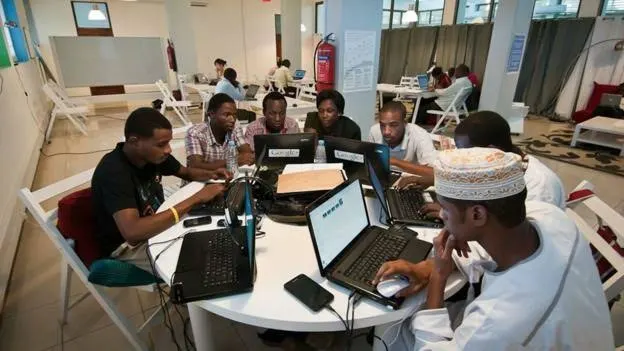
Nigerian startups raised just $11.3 million across nine deals in September, a 96.9 per cent month-on-month collapse from August's $364.1 million, according to funding-tracker data cited by Nairametrics — a plunge that recasts the conversation just as the federal government reveals it is working with Japan's development agency and the sovereign wealth fund to build six dedicated startup funds.
September's total was one-ninth of one month's August flow, which had been carried by unusually large rounds: Moove's $250 million Series C along with $50 million for the e-commerce platform Jumia and $40 million for stablecoin payments firm Yellow Card. Once those single-round anchors are stripped out, the remaining deal base collapses to a level that suggests early-stage Nigerian venture activity has largely stalled rather than merely paused.
The composition of the collapse
The nine-deal fall-off is telling in two dimensions. Quantity — nine deals in a country that was running 20-a-month as recently as August — is the harder signal: it suggests fewer checks being written at every stage, not just fewer mega-rounds. Quality-one is the direction: August's concentration of money in three vehicle-scale rounds, while real, was not representative of a broad market in which dozens of firms could continuously raise venture capital.
For founders, the arithmetic has brutal practical implications. A monthly run rate of $11.3 million across nine deals averages $1.25 million per round — below the threshold at which most seed-stage Nigerian tech companies can hire competitively or expand beyond a single product market. Companies that raised ahead of the slowdown will survive with the cash they have; those timing a raise for the final quarter of 2026 are discovering the bar is now one deal at a time.
What is driving the pull-back
Multiple forces are working against Nigerian venture funding simultaneously. The global venture cycle has tightened under elevated interest rates, a risk-off rotation that pulled money out of frontier-market technology in favour of hard-asset yield and AI-infrastructure plays closer to the money's own home markets. Currency volatility has historically made naira-denominated revenues unattractive to dollar-funded investors at exit, and the stablecoin and offshore-structure workarounds that used to patch this have drawn increasing regulatory scrutiny on several fronts.
There is also a cyclical component specific to 2026: capital that crowded into African fintech in the 2021-2023 boom years is still processing its first full battery of mark-downs, consolidations and down rounds. Investors have narrowed their African portfolios to the proven revenue compounders — logistics finance, payment infrastructure and the enterprise software that survived the 2023-2024 correction — leaving a thinner market for everything else, particularly the pre-revenue, pre-product deals that drive Nigerian deal counts.
Into this funding famine walks the state. The federal government is working with the Japan International Cooperation Agency and the Nigeria Sovereign Investment Authority to establish six funds to finance innovative Nigerian startups — a plan disclosed by NITDA Director-General Kashifu Inuwa Abdullahi at the Global Tech Africa event in Kano last week.
Inuwa made the state's case in Davos-style language. "Private investors can provide not only capital but also equity partnerships, corporate governance, business expertise and leadership to help startups grow," he said — a demand for venture-grade discipline rather than pure subsidy. He framed the Bank of Industry and other development finance institutions as important funders while conceding that public money alone cannot sustain the ecosystem, positioning the JICA-NSIA structure as a way to pull private co-investors off the fence.
Whether six funds can offset a risk-off cycle
The scale question is unavoidable. August's $364.1 million month suggests Nigerian venture needs a floor of not less than $200 million a quarter, roughly $800 million a year at historical pace, to cover revenues in these current funding climes. Six funds, if structured at the $50 million-to-$100 million range that institutional fund sizing in this market typically involves, would put $300 million-to-$600 million of capacity in play — substantial, but not enough to carry deal volumes at 2025 rates without private crowding-in.
The structural arguments therefore matter more than the headline capacity. If each fund is anchored with public monies but subscribes private capital on demonstrated performance, the marginal effect on the market's deal count is far larger than the balance sheet suggests, because the government's signal function reassures co-investors and accelerates the deal-to-diligence cycle. This is the logic behind NSIA's existing vehicles and JICA's development infrastructure programmes elsewhere in the region.
For Nigerian founders, the September statistic is a warning about runway rather than a death sentence. The venture market is not zero: payments, embedded finance, digital agriculture and the AI-adjacent tools serving enterprise are still drawing strategic capital. But the era of enough capital to spare for individual bet-the-company risks is over, and the next several quarters will reward cash discipline, clean-unit economics and the ability to raise domestically from institutional players who understand the domestic market — crowns of the funding puzzle that JICA-NSIA proposes to engineer along the way.
Through the rest of 2026 and into 2027, the funding trajectory will decide whether Nigerian technology contracts into a payback epoch of patient consolidation, or whether the global cyclical downturn in venture risk appetite leaves a six-fund public-led bridge intact as the platform of next decade's compounders.
Up next
IMF Chief Tells Central Banks to Price an AI Slowdown as Markets Whipsaw
Kristalina Georgieva said any slowdown in AI-driven growth must be factored into policy, warning that volatility is likely to continue and complicate inflation fights.
More in Economy
See all
Kenya’s Private Sector Wakes Up: PMI Hits 52.5, Its Best Reading of 2026
October’s Stanbic PMI delivered Kenya’s first expansion in eight months, joining Nigeria’s five-month growth streak — with inflation still running at 7.3 per cent across the region.

China Splits in Two: Factory-Gate Inflation Hits 4.5-Year High as Consumer Prices Cool
October producer prices surged 5.7 per cent while consumer inflation slowed to 0.7 per cent, compressing manufacturing margins across the world’s factory.
Eurozone Inflation Hits 4% as Lagarde Warns Prices Will Stay High
Annual inflation reached its highest level since September 2023 on an energy-driven surge, but the ECB president declined to commit the council to a December hike.
About the author
Tunde Balogun
Economics Correspondent
Tunde Balogun writes for BusinessPress.
More by Tunde Balogun


