
Brent Endures Worst Week Since 2020 as War Premium Unwinds
Crude lost about 16-17 per cent for the week as ceasefire bets compacted the Middle East risk premium, with JPMorgan sizing a 1.4m b/d surplus for October.
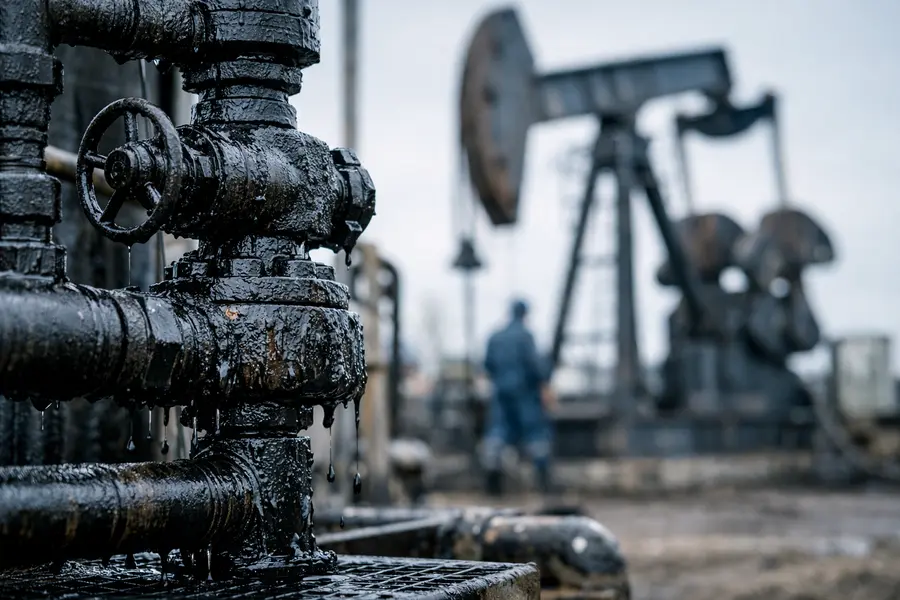
Brent crude capped the most brutal week oil has endured since 2020, with the global benchmark shedding roughly 16–17 per cent of its value in five sessions and briefly trading near $96.60 — the steepest percentage fall for a full Trading week since the pandemic demand collapse and, in absolute dollar terms, the biggest drop on record data going back to 1988, according to LSEG data.
WTI tracked the same rotation and finished near $90 a barrel. The week began with the market pricing worst-case escalation around the Middle East conflict and ended with ceasefire betting, reopened diplomatic channels and traders marking down risk premiums that only days earlier had looked structural. New York's front-month Brent futures held just below the $100-a-barrel line, a level that defined the year's high-water mark for oil's 2026 price regime.
The geopolitics premium unwinding at speed
The fall is best understood as the deflation of a war premium. Crude jumped earlier in the autumn as tension escalated over the Strait of Hormuz, through which roughly a fifth of the world's seaborne oil flows, and spiked further as strikes and vessel incidents multiplied. Those fears had pushed Brent above $100 and the premium into the market's 2026 price band — Nigeria's 2027 budget assumption and other producer states' fiscal arithmetic among its direct beneficiaries.
Between Friday and this weekend, that premium came off fast. US President Donald Trump said in a CNN interview broadcast Sunday that further strikes on Iran were "highly unlikely" if nuclear talks and the reopening of the strait progress. Whether the changes are durable or transient is the market's open question of the moment: Iran demands lifting of the US naval blockade, sanctions relief and the release of frozen assets before it will fully open Hormuz, demands US Secretary of State Marco Rubio has called unacceptable — so the path through to a full de-escalation remains long, and highly reversible.
What the physical market says while paper rallies
Beneath the paper-market easing, the physical trade is straining. Murban crude, the Gulf physical benchmark, gained more than 3 per cent — closing up $3.28 at $99.17 a barrel and trading nearly $1.70 above Brent futures — a gap that signals barrels with physical tightness through the Gulf are commanding a premium the futures market no longer carries. Physical-market tightness against a falling benchmark is a strong reading: buyers who can get cargoes are paying up for them even as benchmark futures fall back with the risk premium.
Import-dependent economies, meanwhile, are reading the slide as relief passed along to their prices. For Nigeria and other West African import-heavy states, this week's crude fall directly eases the average subsidy and FX bill, though the same slide compresses government oil revenue per barrel in a budget year in which national spending plans have been written against earlier higher price scenarios for the 2027 fiscal cycle.
JPMorgan's surplus arithmetic explains the pressure
Even behind the geopolitical shifts, the underlying flow numbers are oil-bearish. JPMorgan said on Friday the global oil surplus ran at about 1.1 million barrels a day in September and could widen to 1.4 million barrels a day in October — a level of supply-driven imbalance that, uninterrupted, deepens the next inventory build and puts the June-vol market pricing under increasing structural pressure. A surplus of that scale reframes the strategic oil question: when inventories are swelling by this margin, the market is fundamentally abundant on any day tranquility returns to the war headlines.
For Nigerian barrels and those of its OPEC+ peers, the surplus has all sorts of consequences. It pushes marginal producers into competition for market share, pressures official selling prices for the grades that trade at a discount and makes the return to budget-balancing prices ever harder — precisely the scenario that forced Nigeria's fiscal-planning constant to reprice revenue assumptions toward the low-$90s in this autumn's 2027 plan reconstruction and debt-service modelling.
Regional currents in the sell-off
Iraq agreed with the United States to export crude through the Strait of Hormuz, Baghdad's oil minister said over the weekend, removing one of the variables that had kept buyers hedging against the closure scenario. In Riyadh, meanwhile, a Houthi attack damaged a building in the Saudi capital's financial district, with minor damage to Saudi Aramco offices — a stray marker of regional risk even as the market moves the other way. Saudi Arabia's response, according to state-controlled media, was that "the danger has passed", but the episode confirms that counterparties on both sides of the oil trade are willing to absorb damage at the same time they place their own bets.
For this week, the oil market moves into a fresh selection: rising tensions, longer cease-fire processes and the surplus arithmetic of the world's inventories. Brent at $96.60 makes the test straightforward: either the supply-sell-off extends the current priced-down view of world oil, or supply signals in the physical market and renewed pressure around the strait force a fresh premium back into the front-month Brent futures curve.
Up next
Teleperformance 15% Collapse Shows Europe Taking the AI Hit in Services
The Stoxx Europe 600 closed about 1 per cent lower on Friday as Teleperformance cut its outlook and insurers eased, completing a week of broad de-risking.
More in Markets
See allOil Climbs to $107 as Middle East Attacks Threaten Supply
Brent crude rose to about $107 a barrel as Middle East attacks threatened supply through the Strait of Hormuz, a windfall and a cost for Nigeria.
Oil Prices Slide as Geopolitical Risk Premium Eases, Weighing on Nigeria's Outlook
Brent slipped toward $104 and WTI to about $94 as supply-route fears eased, a move with direct consequences for Nigeria's budget and FX earnings.

Gulf Equities Rally on Iran De-escalation Bets
Saudi Tadawul and Qatari stocks rose as investors bet the US midterm sweep reduces the risk of a wider Iran conflict.
About the author
Kwame Mensah
Markets Correspondent
Kwame Mensah writes for BusinessPress.


