AFEX sees paddy rice rally 9.93% while maize stays weak, soybeans and sorghum edge higher
Mixed grain prices as rice firms on selective demand while maize remains under pressure.
AFEX recorded mixed price movements across grains in recent trading, with paddy rice rallying 9.93 per cent to N494.71 per kilogramme while soybeans gained 5.50 per cent and sorghum edged up 1.58 per cent, even as maize remained under pressure.
The rice price increase comes after the third-quarter average stood at N342.35 per kilogramme, down 40.7 per cent year-on-year, reflecting earlier price corrections. The recent uptick suggests some firming in demand or tightening in available supplies in certain locations, though prices remain well below previous peaks.
The Federal Government's reduction of the rice import duty from 70 per cent to 47.5 per cent effective July 1, 2026 was aimed at improving supply and moderating prices. Retail rice prices have remained elevated at around N71,008 per 50kg in parts of the market, indicating that import policy changes take time to filter through to consumers and that domestic supply dynamics remain important.
Soybeans and sorghum posted modest gains, reflecting selective demand from feed millers and processors. These crops play important roles in animal feed and industrial use, and their prices often move in response to maize availability as buyers substitute between feed ingredients.
AFEX's broader platform activity has grown significantly, with total turnover up 392.49 per cent year-to-date to N4.83 billion across 19.92 million units as of August. The platform's growing role in price discovery is providing more transparency into commodity markets, though trading volumes remain concentrated in a few key crops.
Market analysts say the mixed performance across grains reflects the complex interplay of harvest timing, import policy, feed demand and macroeconomic factors affecting purchasing power across the value chain.
Strategic implications
The development carries broader implications for stakeholders across the value chain. For businesses, it may affect input costs, funding conditions or competitive dynamics depending on the sector. For policymakers, it highlights the need for coordinated responses that address both immediate pressures and longer-term structural issues.
As the situation evolves, market participants and industry players will be watching for follow-up actions, implementation details and measurable outcomes. The effectiveness of proposed measures will be key to determining whether the intended benefits materialise in practice.
In the current environment, agility and informed decision-making remain important as companies navigate changing conditions and adjust their strategies to new realities.
Longer-term outlook
Looking ahead, the trajectory of these developments will depend on policy implementation, market response and global conditions. Stakeholders across the public and private sectors will need to adapt to evolving dynamics while maintaining focus on long-term objectives.
Continued monitoring of key indicators and proactive engagement with emerging trends will be essential to navigating the period ahead. The interplay of structural factors and cyclical pressures is likely to shape outcomes for some time to come.
Outlook and considerations
As developments unfold, stakeholders will need to monitor implementation timelines, policy responses and market reactions closely. The coming weeks are likely to provide further clarity on the direction of these trends and their broader implications.
In an environment of evolving conditions, maintaining flexibility and staying informed will be key. The balance between near-term pressures and long-term opportunities will continue to shape decision-making across sectors.
Feed market dynamics
The relationship between maize, sorghum and soybeans in the feed market remains critical. When maize prices fall sharply, as seen recently, demand for sorghum as a substitute tends to weaken, but other factors can offset this relationship. Similarly, soybean meal demand depends on overall feed production levels.
Poultry producers, in particular, are sensitive to feed costs, which typically account for the majority of production expenses. Movements in grain prices therefore have significant implications for the cost of animal protein.
Outlook
Price movements in the coming months will depend on harvest progress, the pace of offtake from government programmes, import flows and demand from processors. With retail prices for staples still high despite some commodity price corrections, the pass-through to consumers remains a key concern for policymakers.
Up next
AFEX maize plunges 13.44% below guaranteed minimum price as supply pressures weigh
Maize fell to N319.93/kg below the N350/kg GMP as harvest supply pressures mount.
More in Agriculture
See all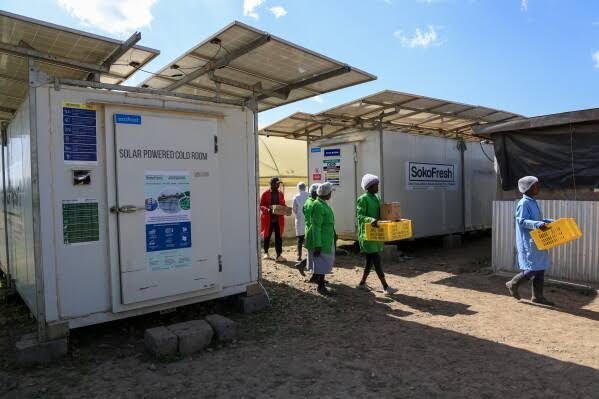
UK Clean Energy Fund Backs Solar Cold Storage for Nigerian Food Markets
More than £2 million from the UK's ZE-Gen Scale-up Fund will back ten African clean energy projects, including 100 solar cold storage units and four solar agricultural hubs in Nigeria.
EIB Global, FCMB Stake €85m to Support Nigeria's Agricultural Value Chains
EIB Global and FCMB have committed €85 million in financing to support companies across Nigeria's agricultural value chains, targeting production, processing and distribution businesses that struggle to access long-term capital.
The Bigger Business of Feeding Africa: Farmers, Buyers and Processors
Africa's food system still fails to match farmers with fair buyers and processors with reliable supply, making the business of feeding the continent as much a market-design problem as a production one.
About the author
Abena Ofori
Agribusiness Correspondent
Abena Ofori writes for BusinessPress.
More by Abena Ofori