Nigeria Pitches $30bn-a-Year Climate Finance Market for Smallholder Farmers
PICTT and YAPU Solutions proposed a classification and financing framework for adaptation lending, with experts calling for public guarantee envelopes, regional risk instruments and coverage beyond crops.
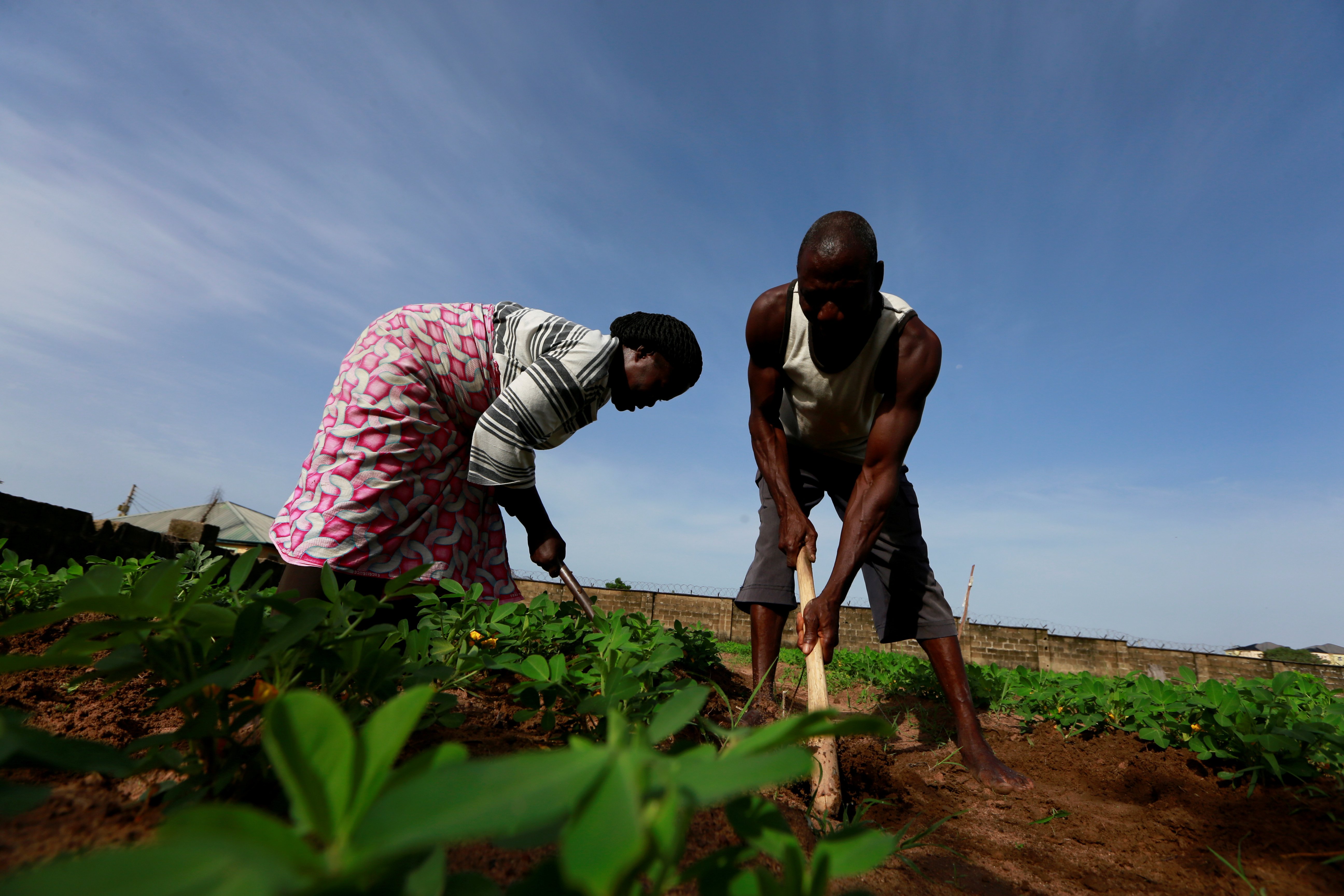
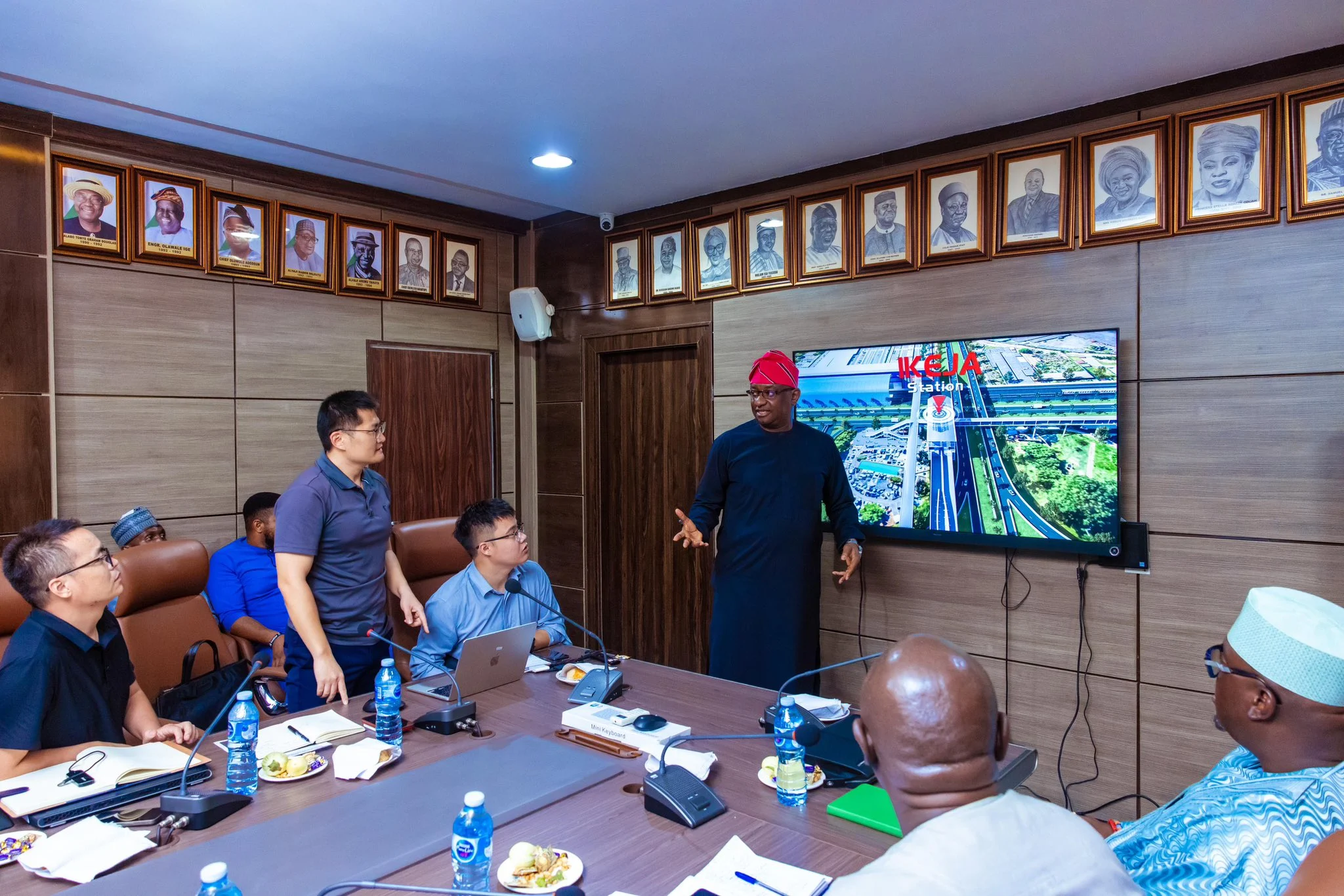
Nigeria is working on a classification and financing framework that could direct an estimated $30 billion a year of adaptation investment towards smallholder farmers, with the Presidential Implementation Committee on Technology Transfer and YAPU Solutions presenting the proposal at a taxonomy validation workshop in Abuja on October 20, 2026.
Christoph Junghleisch, Managing Director of YAPU Solutions, put the size of the opportunity at up to $30 billion in annual investment potential for smallholder farmers, and said the initial structure could involve a pilot project of between $100 million and $200 million with a target of scaling financing to $1 billion in the first expansion phase. He was explicit that those figures are targets rather than confirmed funding commitments, and that no pilot start date has been announced. The workshop, held on adaptation and resilience solutions, brought together financial institutions, agricultural experts and other stakeholders to validate the taxonomy, identify appropriate financing instruments and develop an implementation timeline. The proposal was reported by The Nation, BusinessDay and News Agency of Nigeria.
Dr Dahiru Muhammed, Chairman of PICTT, said the committee's work is aimed at producing an implementation framework for Nigeria's national taxonomy, the instrument that defines which activities qualify as climate-resilient and therefore eligible for climate finance. He explained that the Federal Ministry of Finance and the United Nations Development Programme are developing the national taxonomy while PICTT and its technical partners focus on making it operational and accessible to rural communities. "Having a national taxonomy is good, but without defining which activity qualifies as adaptive or resilient to climate change, there is no way you can access the financing," he said.
The taxonomy is a map, not a loan book
The framing that a taxonomy is good but insufficient deserves to be taken literally, because the gap it identifies is where most climate finance frameworks stall. A taxonomy classifies activities. It does not create a borrower with creditworthy cash flows, it does not price the risk of a failed season, and it does not tell a commercial bank what it is entitled to do if the crop does not come in. The multilateral funds that make the largest volumes of adaptation money available require a project pipeline, an appraisal and a repayment or grant structure, and a classification document is the entry ticket to that pipeline rather than the pipeline itself.
Nigeria's position on the taxonomy itself is further along than it is on delivery. The UNDP's project to validate investment criteria and identify a pipeline of eligible projects ran from March 2025 to March 2026 on a budget of $500,000, and consultations in July 2026 through the Integrated National Financing Framework Facility brought the national taxonomy closer to finalisation, with South Africa's 2022 green finance taxonomy cited as a regional precedent. A $500,000 technical budget is not a small sum for a classification exercise, but it is a rounding error against the $2.5 billion in climate-related financing Nigeria has attracted, and it is a rounding error against a $30 billion annual ambition. The taxonomy is the cheap part of the work.
Where the money actually has to come from
Dr Charles Nyangbe, WorldFish's Country Representative in Nigeria, put the practical proposal on the table: a targeted public envelope of climate funding routed through financial institutions so that commercial banks can lend to climate-vulnerable farmers, with public money used as guarantees. That is the instrument design that decides whether this framework is consequential, because the guarantee converts an unpriceable weather risk into a priced one.
His second point is that the risk is not uniform. Farmers in northern Nigeria face drought, while southern producers face flooding and waterlogging, and the appropriate instrument differs accordingly. Index-based insurance pays out when a measured parameter such as rainfall or temperature crosses a threshold, which means it can be priced without inspecting individual farms, and blended finance layers a concessional or first-loss tranche under a commercial one so that a bank can lend against a product it would not otherwise write. Nigeria has attracted about $2.5 billion in climate-related financing, which is a fraction of requirement, and Nyangbe argued for coverage beyond crops to include livestock, fisheries and aquaculture, which he said are routinely underweighted in the discussion even though flooding can destroy ponds and aquaculture facilities outright.
Junghleisch said YAPU is engaging development finance partners, including the Bank of Agriculture and the African Development Fund, while seeking private capital, and that digital technology will be central to the design, with systems that track disbursements and make transactions transparent and auditable. His stated priority was "smart use of technology, optimisation of processes that enable you to document every cent, Naira, that you are basically bringing to the smallholder farmers". On a programme whose credibility will rest on whether money reaches the intended beneficiary, that auditability point is the substantive one rather than the technical one.
Why the $30 billion figure needs its methodology
An estimate of the annual investment potential for smallholder climate adaptation is a useful ambition, and an unexamined one is a poor basis for planning. The figure has been reported without a published derivation, and the arithmetic it implies is demanding: $30 billion spread across Nigeria's smallholder population is several times the current annual credit extended to the sector by the entire agricultural banking system. Publicly reported disbursement by the Bank of Agriculture, the main institutional channel, is a small fraction of that.
The gap between ambition and mechanism is where the useful scrutiny lies. A national taxonomy that classifies adaptive activities tells a development finance institution that irrigation, drought-resistant seed systems, water management and livestock adaptation are eligible. It does not tell a bank in Kano what a farmer borrowing for irrigation should pay, how the repayment behaves in a bad season, or what happens to the facility in a flood year that destroys the asset it financed. Those questions are answered by the guarantee structure, the repayment design and the loss-sharing arrangement, and they are answered locally, which is why the framework's emphasis on operations in rural communities, on technology for tracking disbursement, and on bringing federal, state and local government into flood defence is the part of the design that will decide whether the classification produces lending.
What would make this a finance programme rather than a workshop
Three markers would indicate that the framework has moved from design to delivery. The first is a published eligibility rulebook: specific activities, in specific regions, with defined evidence requirements, so that a lender can assess a loan against the taxonomy without commissioning a consultant. The second is a guarantee or first-loss facility with a stated size, a named provider and a published claim process, because without it the classified activities remain unbankable. The third is a lending product with published terms: pricing, tenor, repayment structure and the treatment of a failed season, offered by at least one commercial bank with the pilot.
The $100 million to $200 million pilot is a sensible sequencing decision, small enough to fail cheaply and large enough to produce a track record. The $1 billion first expansion phase should not be triggered by workshop consensus but by evidence from that pilot: claims paid when they should have been, losses absorbed where they were designed to be, and farmers who took a loan and repaid it. Nigeria's climate finance problem is not a shortage of frameworks. It is a shortage of instruments that a lender can put its own balance sheet behind, for a borrower who cannot offer collateral. The taxonomy makes that instrument possible. It does not build it.
Up next
Bank of Agriculture Reports N450bn Programmes Reaching 500,000 Smallholder Farmers
Progress figures show 2.5 million bags of fertiliser supplied, N20 billion mobilised under the price floor and 1,500 tractors deployed across 23 states, while beneficiary counts reported elsewhere differ.
More in Agriculture
See all
Growtech West Africa Partners NADF to Boost Agricultural Technology Access
Growtech West Africa has announced a collaboration with Nigeria's National Agricultural Development Fund ahead of its inaugural Lagos exhibition, aiming to connect agribusinesses with technology, finance and international expertise.

WACOT Renews Edo State Fertiliser Partnership to Expand Input Supply
WACOT Limited has renewed its agreement with the Edo State Government on fertiliser production through the Edo State Fertilizer and Chemical Company, a partnership that began in 2017.

Sunbeth Capital Raises N150 Billion Commercial Paper to Finance Cocoa Value Chain
Sunbeth Capital is mobilising about N150 billion through commercial paper issuances to fund operations across Nigeria's cocoa value chain, targeting aggregation, processing support and export readiness.
About the author
Tunde Balogun
Economics Correspondent
Tunde Balogun writes for BusinessPress.
More by Tunde Balogun