Bank of Agriculture Reports N450bn Programmes Reaching 500,000 Smallholder Farmers
Progress figures show 2.5 million bags of fertiliser supplied, N20 billion mobilised under the price floor and 1,500 tractors deployed across 23 states, while beneficiary counts reported elsewhere differ.
The Bank of Agriculture has reported progress on two financing programmes worth more than N450 billion, with the Renewed Hope Smallholder Support and Value Chain Fund reaching over 500,000 smallholder farmers and the Guaranteed Minimum Price Programme beginning to buy grain directly from them.
Tribune Online, which reported the bank's progress on October 19 and 20, 2026, said the N250 billion Renewed Hope Smallholder Support and Value Chain Fund and the N200 billion Guaranteed Minimum Price Programme together account for more than N450 billion in agricultural financing aimed at raising production and improving market access for farmers.
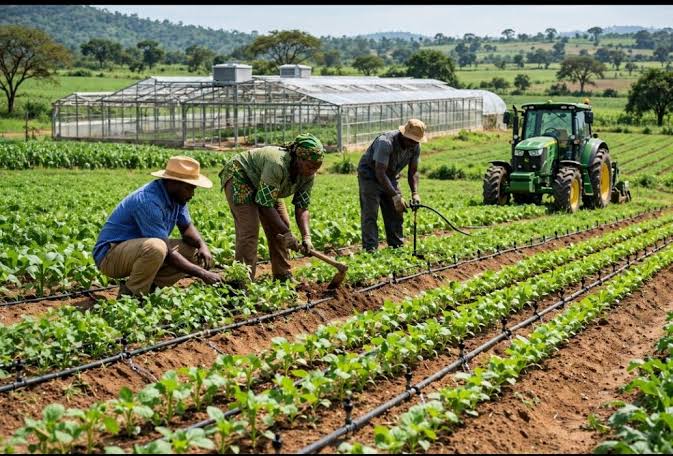
Under the Renewed Hope programme, the bank has financed more than 500,000 smallholder farmers across 16 states, including more than 70,000 women, and has supplied 2.5 million bags of fertiliser and 300,000 bags of certified seeds. The next phase targets more than three million bags of fertiliser and 509,000 bags of seeds, delivered through Farmer Aggregation Companies and other value-chain partners. Under the Guaranteed Minimum Price Programme, launched in September 2026, the bank has mobilised N20 billion and procured approximately 130,000 metric tonnes of maize, rice, sorghum and cassava directly through the scheme. The bank has also deployed more than 1,500 tractors across 23 states under its mechanisation financing initiative, which serves state governments leasing tractors to farmers on a lease-to-own basis, agricultural service providers and youth- and women-led businesses.
The gap between N450 billion and the demand for credit
The scale needs to be read against what the programmes are meant to solve. N450 billion spread across more than 500,000 farmers averages below N900,000 per farmer before any input costs, which for a farm of the size that dominates Nigerian smallholder production is a working capital line, not a transformation of the enterprise. The number of beneficiaries is the achievement; the size of the average facility is the constraint, and the next phase, which triples fertiliser volumes, is a better indication of where the money is going than the headline disbursement figure.
The bank's own targets are considerably larger. Managing Director and Chief Executive Officer Ayo Sotinrin has said the Renewed Hope programme, which onboarded more than 400,000 farmers across more than 20 states on the bank's earlier count, targets two million smallholder farmers nationwide, with an estimated potential impact on about 11.5 million households. He has been explicit that these are programme targets and projected reach figures rather than confirmed outcomes, and the bank won the Agricultural Finance Institution of the Year award at the 2026 BusinessDay BAFI Awards on the strength of the same programme. The gap between 500,000 farmers reached and two million targeted is the most honest measure of the distance still to travel.
Why the price floor matters more than the inputs
The N200 billion Guaranteed Minimum Price Programme is the more interesting of the two, because it addresses the constraint that farmers cannot borrow their way out of: harvest-time price risk. Working capital financed at prevailing prices assumes the farmer can sell into a market that pays a predictable price, and in a market where produce is dumped at the point of harvest, that assumption fails and distress sales set the price.
The floor for eligible maize farmers has been set at N350,000 per tonne, about 6.5 per cent below AFEX's September 30 close of N374,400 per tonne, with the Nigeria Commodity Exchange providing warehousing, grading and receipts for maize, sorghum and soybeans. A floor set below the market price binds only when prices fall, which means the programme is an insurance mechanism rather than a support price that lifts every farmer's income. On the evidence so far, the visible output is N20 billion mobilised and roughly 130,000 metric tonnes procured, against a target of aggregating 400,000 metric tonnes of grain and reaching more than 500,000 farmers. That is meaningful physical progress, and it is still a fraction of the target.
The consequence for lenders is the important point. A floor price backed by a bank that can buy at it converts a farmer's crop into collateral with a reference value, which is the precondition for warehouse receipt finance, and warehouse receipts now have a formal footing under the Investments and Securities Act 2025. The missing step, as market analysts have repeatedly noted, is bank acceptance of those receipts as collateral. Until that happens, the Guaranteed Minimum Price Programme supports farmers directly but does not yet transform the credit market around them.
Two beneficiary counts that do not reconcile
The bank's reported figures and the political figures differ in ways that matter for evaluation. The bank describes more than 500,000 smallholder farmers financed across 16 states under the Renewed Hope programme. Vice-President Kashim Shettima said at the Presidential Villa on October 12, 2026, citing figures disclosed to the Arewa for Tinubu delegation, that the Bank of Agriculture had disbursed N450 billion to 700,000 smallholder farmers, with about 70 per cent of beneficiaries from the northern region. Reporting on that statement noted that the period covered by the disbursement was not specified and that no regional breakdown of amounts was provided.
Two hundred thousand beneficiaries, an undisclosed measurement period and an unquantified regional skew are not reconcilable from the public record, and the difference is not cosmetic. A programme that has reached more than 70,000 women is making a distributional claim that should be auditable, and a figure in which the northern region accounts for 70 per cent of beneficiaries is a fact about the geography of agricultural finance that policymakers would want verified rather than repeated.
What the recapitalisation has to deliver
The constraint on all of this is the bank's balance sheet, and that is where the recapitalisation comes in. The Federal Government has approved N1.5 trillion to strengthen the Bank of Agriculture's capacity to lend at scale, and the bank has positioned the guaranteed price floor, mechanisation finance and the smallholder input programme as a single package aimed at production and market access. The mechanics reflect a sound theory: inputs raise yield, a price floor protects income, aggregation creates marketable lots, and receivables plus a price reference turn those lots into something a bank will lend against.
Two indicators will show whether the package is working. The first is whether private commercial banks start accepting warehouse receipts from the aggregation companies as collateral, because that is what converts public balance sheet into private credit. The second is whether the guaranteed price floor is actually used at harvest, rather than sitting as an announcement while produce is sold into distress at the farm gate. Food inflation, which the National Bureau of Statistics put at 19.57 per cent in August 2026, down from 20.31 per cent in July, and which the bank cites as the context for its programmes, will be the slowest and least sensitive of the indicators to read.
Up next
MobiBank Names Strategic Partner and Shareholder for Nigerian Launch
MobiBank has added a strategic partner and minority shareholder in Nigeria, its first African implementation market, while naming ten priority markets and confirming the group keeps technology, brand and control.
More in Agriculture
See allEIB Global, FCMB Stake €85m to Support Nigeria's Agricultural Value Chains
EIB Global and FCMB have committed €85 million in financing to support companies across Nigeria's agricultural value chains, targeting production, processing and distribution businesses that struggle to access long-term capital.
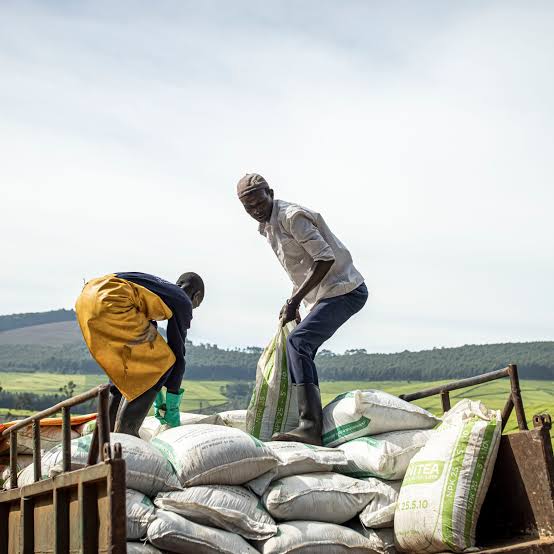
The Bigger Business of Feeding Africa: Farmers, Buyers and Processors
Africa's food system still fails to match farmers with fair buyers and processors with reliable supply, making the business of feeding the continent as much a market-design problem as a production one.
Growtech West Africa Partners NADF to Boost Agricultural Technology Access
Growtech West Africa has announced a collaboration with Nigeria's National Agricultural Development Fund ahead of its inaugural Lagos exhibition, aiming to connect agribusinesses with technology, finance and international expertise.
About the author
Abena Ofori
Agribusiness Correspondent
Abena Ofori writes for BusinessPress.
More by Abena Ofori