
Indorama Lines Up $261m Fourth Fertiliser Train to Expand Nigeria’s Urea Export Base
The proposed fourth production line extends the company’s position among the world’s largest urea exporters — and pushes Nigeria’s gas-value-addition agenda further from rhetoric to capacity.
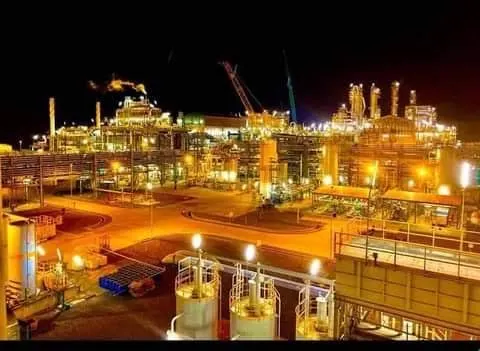
Indorama Eleme is planning a US$261 million fourth fertiliser line at its Nigerian production base, according to BusinessDay's report of the proposed expansion — a project that would extend the company's position as one of the world's largest urea exporters from Nigerian gas and deepen the country's move from raw-material exporter to processed-goods manufacturer.
The investment adds a fourth production train to a complex that has already made Nigeria a material player in the global fertiliser trade, and it arrives as fertiliser economics sit at the centre of two policy debates at once: Africa's food-security agenda, where affordable input supply determines yields, and the gas-value-addition agenda, where Nigeria has spent the reform era arguing that its molecules should leave the country as products rather than as raw feedstock.
What a fourth line changes
Capacity is the strategic variable in fertiliser markets. Urea production is scale-driven: plants that add trains spread their gas procurement, logistics and export infrastructure across more tonnes, lowering unit costs and strengthening their position in a market where Brazilian, Indian and European buyers contract in bulk. A fourth line moves Indorama further down that curve — and pushes Nigeria's export volumes higher on the same gas feedstock the complex already secures.
For the domestic market, the expansion matters through availability. Nigeria's farmers have suffered input shortages and price spikes whenever global fertiliser markets tighten; a larger domestic production base with committed local supply obligations makes the national input bill less hostage to world prices, and supports the yield gains the agricultural-growth agenda depends on.
The gas-value-addition thesis, delivered
The project is the reform era's argument in physical form. Nigeria has historically exported gas as LNG and flared much of the rest, while importing refined products and chemicals it could produce. The policy turn — domestically processed urea, petrochemicals, methanol and refinery products — converts that position, and fertiliser is the flagship because the value chain is proven: Nigerian gas becomes urea, urea becomes export earnings and farm yields, and the plant employs industrial workers at export-grade standards.
The $261 million ticket also signals producer confidence in the enabling environment: gas-supply reliability, port logistics for exports and a foreign-exchange regime that allows repatriation. Producers of this scale do not add trains into jurisdictions they expect to strangle their cash flows.
The global market backdrop
Feedstock is the strategic moat beneath the expansion. Nitrogen fertiliser economics are gas economics, and Nigeria's position — associated and non-associated gas reserves that far exceed domestic power demand — gives its producers an input-cost advantage against competitors buying feedstock at world prices. The fourth line monetises that advantage at exactly the moment importers are paying premiums for supply security.
Indorama's timing rides a reshaped world fertiliser market. Energy-price volatility has made nitrogen fertiliser supply geopolitically sensitive, with importers diversifying away from concentrated sources; African and Asian buyers have repeatedly faced affordability crises when urea spikes. A larger Nigerian exporter adds resilient supply on the seaborne market — and Nigeria earns the processing margin, not just the molecule's value.
The agricultural read-through compounds the commercial one. West Africa's regional food production push — from Nigeria's dry-season farming programmes to input-subsidy schemes across the Sahel — depends on urea availability in the planting windows. Export-oriented capacity with a domestic obligation serves both.
What to watch
The downstream compatibility matters too. A fourth line produces urea the existing export terminals, bagging plants and shipping arrangements must absorb, so the expansion's real timeline is set as much by logistics as by construction — the constraint that separated Nigeria's fertiliser exporters from their capacity for most of the last decade.
The project's milestones are conventional but consequential: final investment decision, gas-supply agreements, and the construction timetable against Nigeria's infrastructure constraints. If the fourth line reaches production, the immediate tests are export volumes and domestic fertiliser prices in the following planting season. A $261 million line is, on the evidence of the complex's earlier trains, a bet that Nigerian processed-goods exports are a growth business — and another step in the country's long argument with itself about what its gas is worth.
Up next
Nigerian Oil Companies’ Revenue Jumps 58.6% to N11.81trn — but Profits Barely Follow
Seven listed producers grew nine-month revenue sharply on strong crude prices, with acquisition charges and finance costs absorbing most of the gains before they reached the bottom line.
More in Agriculture
See all
Cross River Plots 15,000 Tonne Coffee Weekend Plan
Cross River State targets 30 million coffee seedlings and 15,000 tonnes annual output with 6,000 hectares of plantations across three LGAs.

North-East Poultry Farmers Warn Sector Near Collapse
Poultry farmers in Borno, Yobe and Adamawa seeking government intervention as input costs threaten the North-East poultry sector with collapse.

Presco Lifts Nine-Month Revenue 12.7 Percent to N222bn
Presco grew nine-month revenue 12.7 percent to N222 billion as Nigeria tight edible-oils market and its integrated palm oil model sustained double-digit demand.
About the author
Abena Ofori
Agribusiness Correspondent
Abena Ofori writes for BusinessPress.


