
Brent Crude Slides Below 100 Dollars on Ceasefire Bets
Brent crude dropped below 100 dollars for the first time in two months as investors bet post-midterm politics will end the Iran war premium.
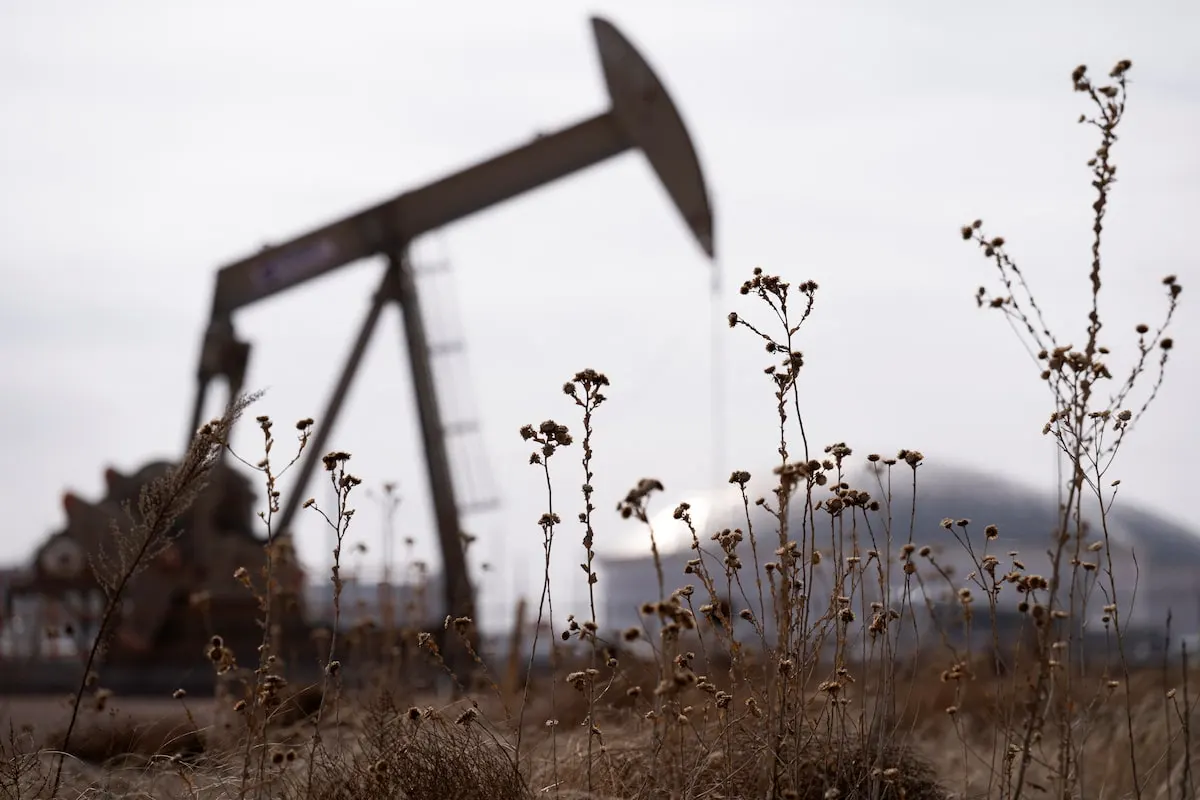
Brent crude collapsed below $100 per barrel this week for the first time in two months, wiping out roughly 20 per cent of its value in five sessions and heading for its largest weekly loss since April 2020, as investors bet the Democratic sweep in the United States midterm elections will push Washington toward ending the eight-month war with Iran.
Wednesday's session delivered the most dramatic single move, with Brent falling close to 9 per cent and US West Texas Intermediate more than 8 per cent, as reports of the white-collar version of electoral accountability filtered through the market. Both crude contracts slipped below the psychologically important $100 line for the first time since the start of October, and prices steadied in the mid-$94 to $96 range as traders weighed whether the repricing has room to run.
The politics of a price collapse
The election map explains the speed. Democrats captured both chambers of Congress on Tuesday in a rout that cost President Donald Trump's party its sole control of Washington, blamed by the administration's own allies — loudly — on elevated fuel prices and the war's unpopularity. Vice President JD Vance said in a social media post that the Republican defeat owed much to the eight-month-old Iran conflict, and the President himself conceded he had no immediate plans to escalate strikes, a marked change in posture that moved the odds of a de-escalation sharply into investors' favour.
That political read is now fully embedded in futures. Traders are betting that narrower room for military escalation translates into restored Strait of Hormuz shipping flows and an eventual return of Iranian barrels — or at least the removal of the disruptions that elevated the price of seaborne fuel since July. Persian Gulf crude exports are recovering from their wartime lows, though product shipments remain constrained, and together with Ukrainian strikes on Russian refineries they have kept refined-product markets tighter than crude itself. US distillate inventories below 100 million barrels, the lowest level since 2003, are the hardest constraint still standing between the headline crude price and genuine normalisation.
The inflation window this creates
The macroeconomic significance is immediate. Crude prices were the principal engine of the global inflation re-acceleration that has pushed the US Federal Reserve and European Central Bank into rate hikes this year, with the Bank of England expected to join them by raising rates on Thursday. Oil now trading a fifth cheaper pulls directly at that inflation mechanism. Citi has publicly argued that a lasting reopening of the Strait of Hormuz could invert the policy debate entirely — from hikes to cuts — and US Treasury yields, which had been climbing toward 5.30 per cent on election night, fell back this week to levels below 4.90 per cent as the repricing spread through bond markets.
Currency markets moved in sympathy, with the dollar holding one-month lows against the euro and emerging-market currencies firming on the risk-on rotation. For Nigeria, the direction cuts both ways: a cheaper Brent means smaller-dollar inflows on its oil receipts, yet the same shift lowers the naira's imported-inflation pressure, supports the disinflation path the Central Bank has built, and reduces the price of the fuel products that dominated Nigeria's import bill in the crisis years.
The supply-side questions still open
Several judgements are still withheld from the futures. The war is not conceded; the Qeshm Island strike and continuing tanker disruptions in the Gulf remain live risks, and any resumption of hostilities would unwind much of this week's move quickly. OPEC has spare capacity but has pulled back on the willingness to deploy it during an election-heavy cycle, and the global product market is structurally short of refining capacity a year into the conflict. If the ceasefire thesis is wrong, Brent's path back through $105 could be abrupt.
Analysts flag two other structural features. First, demand destruction from the $115-per-barrel period has quietly done its work, with the International Energy Agency's monthly assessments showing non-OECD demand growth well below its 2025 pace; that shift lowers the bar for a sustained sub-$100 price. Second, Washington's willingness to cut its multi-billion dollar military support commitments is itself a geopolitical signal that reduces the probability of escalation, because it implies reduced appetite for expeditionary logistics of the kind an Iran operation would require.
What it binds Nigeria to
For Nigeria's fiscal arithmetic, the ballast is real. The 2026 budget benchmarked crude at $64.85 per barrel, which leaves a wide cushion between official revenue assumptions and this week's prices even after the fall — the same cushion that funded much of the government's 2026-reform agenda. Softer crude also means softer kerosene, diesel and aviation fuel prices for consumers, an immediate relief that travels into December's food transport costs faster than any policy measure could.
The risk to watch is the fiscal one: a prolonged period below $90 would compress the Federation Account allocations that pay salaries and fund state governments, just at the moment when the government is pressing its reform legislation through a National Assembly whose political arithmetic has shifted this week. Whether senators from oil-producing states now view the executives' spending plans with less patience is one of the ratings of the new Congress — a domestic consequence of a global pricing signal.
Priced at $94 to $97, crude sits at the centre of what the market calls a ceasefire discount: not a prediction of peace, but a partial payment for its probability. If diplomatic progress confirms the discount over the coming weeks, the oil price will have done more in a fortnight to cut global inflation than any central bank has managed in a year.
Up next
Wall Street AI Wipeout Erases Midterm Rally
The S&P 500 fell more than 3 percent as chip earnings triggered a global AI selloff, erasing Wall Street post-election gains.
More in Markets
See allGold Hits Record High as Oil Slides and Markets Hedge Global Risk
Bullion climbed to about $4,145 an ounce on central-bank buying and rate-cut bets, diverging from crude in a market that is hedging rather than celebrating.
Oil Prices Slide as Geopolitical Risk Premium Eases, Weighing on Nigeria's Outlook
Brent slipped toward $104 and WTI to about $94 as supply-route fears eased, a move with direct consequences for Nigeria's budget and FX earnings.
Oil Climbs to $107 as Middle East Attacks Threaten Supply
Brent crude rose to about $107 a barrel as Middle East attacks threatened supply through the Strait of Hormuz, a windfall and a cost for Nigeria.
About the author
Abiodun Abdullahi
Author / Business and Markets Writer
Abiodun Abdullahi writes for BusinessPress.
More by Abiodun Abdullahi


