CBN and Finance Ministry Put Single-Digit Inflation at Centre of Nigeria's Fiscal Plan
The Central Bank of Nigeria and the Federal Ministry of Finance have placed single-digit inflation at the centre of Nigeria's medium-term strategy, with Finance Minister Taiwo Oyedele estimating that achieving it would save more than $10 billion on 2026 figures.
The Central Bank of Nigeria and the Federal Ministry of Finance have placed single-digit inflation at the centre of Nigeria's medium-term economic strategy, with Finance Minister and Coordinating Minister of the Economy Taiwo Oyedele estimating that achieving it would save the government more than $10 billion on 2026 figures.
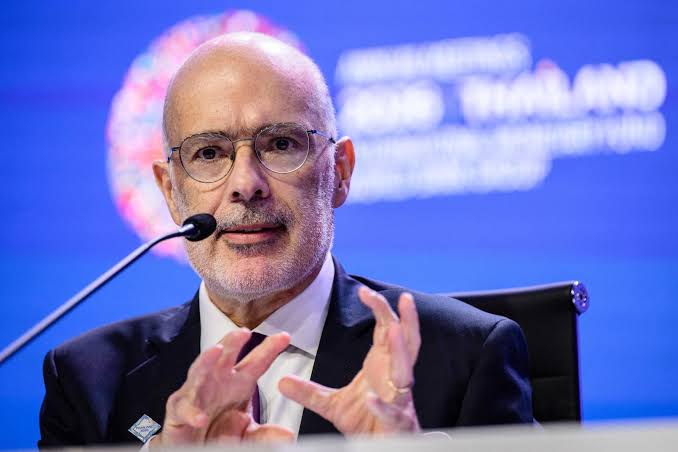
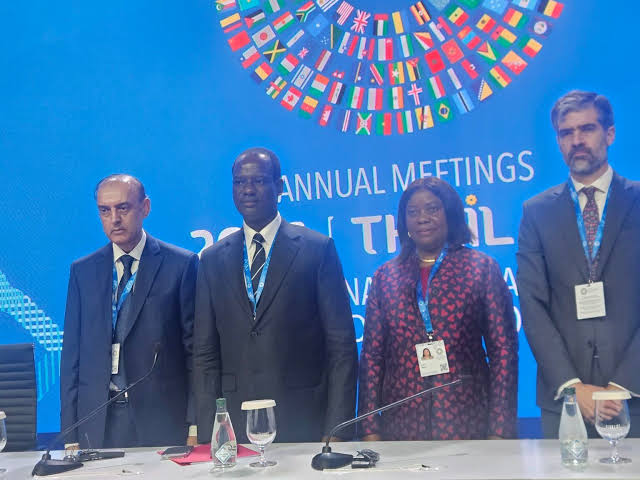
The two officials delivered the message together on Wednesday on the sidelines of the International Monetary Fund and World Bank Annual Meetings in Bangkok, Thailand, signalling that monetary and fiscal policy will now pull in the same direction on price stability.
Central Bank Governor Olayemi Cardoso said single-digit inflation has been adopted as a medium-term objective because price stability matters most to the poorest households. Headline inflation has fallen from around 34 to 35 per cent to roughly 15 per cent, a substantial decline, but Mr Cardoso said "lower double digits is not okay" and that the bank will not rest until inflation returns to single digits.
Mr Oyedele framed the goal in fiscal terms. He said lower inflation would create the conditions for interest rates to fall to single digits, easing the cost of servicing government debt and freeing resources for other spending. On 2026 numbers, he placed the potential saving at more than $10 billion, describing it as an estimate rather than money already banked.
Why $10 billion is a fiscal number first
The significance of the target lies less in growth arithmetic than in the government's own balance sheet. When inflation and nominal interest rates are high, the Federal Government pays a large coupon on the domestic debt it rolls over every quarter, and a bigger share of revenue is consumed by interest rather than capital projects. Bringing inflation down would, over time, pull market yields lower, reduce that interest bill and widen the fiscal space available for infrastructure and social spending. That is the logic behind the $10 billion figure, and it explains why the finance ministry is now as vocal about inflation as the central bank.
The shift to inflation targeting
Mr Cardoso said the bank is moving toward an inflation-targeting framework, a change he argued would make policy making more open and transparent. Under such a regime, the central bank sets an explicit inflation objective and communicates the path to it, anchoring expectations more firmly than discretionary decisions can.
Both officials said coordination between fiscal and monetary authorities is now more important than ever. In practice that means the government's borrowing plan, its spending choices and the central bank's interest-rate decisions have to reinforce one another rather than work at cross purposes.
What it means for businesses and borrowers
For companies, the message carries a double edge. A credible path to lower inflation should eventually reduce the cost of capital, making it cheaper to finance expansion and working capital, and it improves the reliability of planning and pricing. Mr Cardoso also pointed to external reserves at an 18-year high and a naira that has been stable and even appreciating as evidence that the reform agenda is holding. The currency's steadiness matters for importers, manufacturers and anyone carrying dollar obligations.
The near-term reality is more complicated. Inflation is still running at roughly 15 per cent, and getting from there to below 10 per cent is the hard part of the journey, not the easy one. Businesses should expect monetary policy to stay cautious, and any early rate relief to be gradual.
The risks and what to watch
The path to single digits runs through food prices, energy costs and the exchange rate. Food inflation has been the most stubborn component, and it responds more to security, transport and harvest conditions than to interest-rate decisions. A renewed slide in the naira or a spike in global oil-driven costs could slow the disinflation trend and push the single-digit goal further out.
Investors and businesses will therefore watch three things closely: the monthly inflation print from the National Bureau of Statistics, the central bank's next rate decision, and the government's borrowing calendar. If inflation keeps falling and fiscal policy stays disciplined, the $10 billion saving Mr Oyedele describes moves from projection toward reality. If not, it remains an aspiration, and the cost of capital stays high for everyone.
Up next
Nigeria's External Reserves Hit Record $55.07bn as Net Buffers Reach $46bn
Gross external reserves rose to an all-time high of $55.07 billion in early October while net reserves climbed to a record $46 billion, CBN Governor Olayemi Cardoso said.
More in Economy
See allInflation cools for a third straight month as food prices ease
The slowdown gives policymakers room to hold, but the service sector is still running hot.
G-24 Warns Developing Nations Pay $500bn More for Debt Than Rich Countries
G-24 chair Taiwo Oyedele said developing countries pay about $500 billion more for debt than developed economies, urging cheaper IMF and World Bank financing.

Nigeria Risks $1bn Export Loss Over EU Deforestation Rules, NEPC Warns
The Nigerian Export Promotion Council warns that exporters could lose more than $1 billion a year if they fail to meet EU deforestation rules, with cocoa most exposed.
About the author
Tunde Balogun
Economics Correspondent
Tunde Balogun writes for BusinessPress.
More by Tunde Balogun