CBN grants JPMorgan approval-in-principle to set up merchant bank in Nigeria
The Central Bank of Nigeria granted approval-in-principle for JPMorgan Merchant Bank Nigeria Limited on October 23, 2026, with the MD nominee and board cleared, after the bank deposited N50bn under its application.
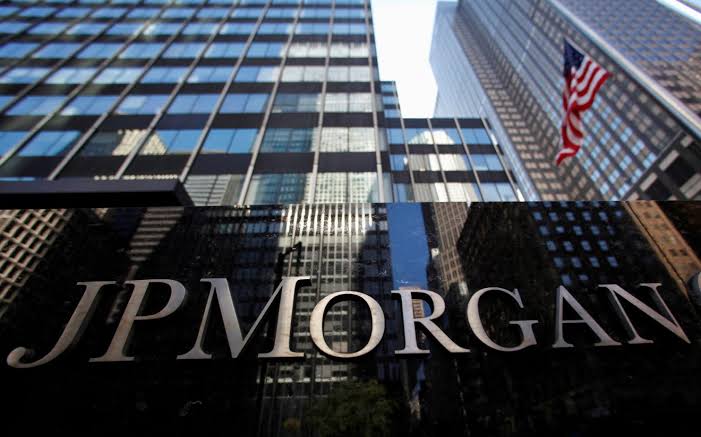
The Central Bank of Nigeria has granted Approval-in-Principle to JPMorgan to establish JPMorgan Merchant Bank Nigeria Limited, the regulator announced on Thursday, October 23, 2026, advancing the United States bank's plan to convert its Lagos representative office into a fully operational merchant banking business, according to Nairametrics reporting of the CBN announcement.
The approval was announced by Michael Akuka, director of the central bank's corporate communications and investor relations department, who said the licence progressed after the successful implementation of Nigeria's banking sector recapitalisation exercise. Approval-in-Principle is an initial licensing stage: the proposed bank must still complete incorporation with the Corporate Affairs Commission and other operational requirements before the CBN will consider a final banking licence, and it cannot commence business under the current approval.
The appointments approved with it
Alongside the structure approval, the central bank cleared the proposed bank's leadership slate, including the nomination of Adedapo Adedayo Olagunju as managing director, since announced non-executive directors Latter Kevin George, Nzelu Chinedum Izunwanne and Syed Gabriel Murtaza, and independent non-executive directors Alade Sarah Omotunde, Ajayi Olukonyinsola and Adetu Seni. That governance formation puts the merchant bank on track toward final licensing rather than leaving it at the exploratory stage.
The approval follows the disclosure, reported on October 20, that JPMorgan had deposited N50 billion with the CBN as part of the merchant-banking application, and comes after the bank spent 2025 signalling its intention to expand in Africa. Under Governor Olayemi Cardoso, the central bank has emphasised financial stability, deeper markets and renewed international confidence, and the CBN statement quoted the governor's framing of the objective as a financial system that is stable, competitive and internationally connected.
[irp]
What a merchant bank does, and why it matters
Merchant banking differs from commercial banking in ways that matter for Nigeria's corporate sector. A merchant bank serves wholesale clients, multinationals, large corporates and financial institutions, providing advisory services, capital-raising, corporate finance and sophisticated treasury capabilities rather than retail deposits and branch banking. JPMorgan's entry would bring world-scale execution capability into a market where much of the investment-banking pipeline, from M&A to debt issuance, has historically been executed offshore.
The timing is not incidental. Nigeria's recapitalised banking sector is bursting with liquidity and regulatory capital, equity markets are riding a 58.87 per cent year-to-date advance, and a wave of proposed offerings, from OPay's New York listing to Dangote Refinery's planned $1.6 billion offering, is swelling the domestic investment-banking workload. International banks positioning for that pipeline typically arrive before the fees turn up.
[irp]
The competition wave it joins
JPMorgan is not alone. Absa is considering converting its Nigerian representative office into a merchant bank, a plan disclosed in the presidential aide's investment summary published on October 24, and Standard Bank Group has already signed an agreement to invest up to $200 million in OPay through a concurrent private placement tied to the fintech's IPO. The direction of travel is unmistakable: global institutions are rebuilding Nigeria exposure after years of retreat.
For domestic banks, the arrival of merchant-banking competitors is double-sided. It validates the reforms that made Nigeria investible again and increases pressure on fees in the wholesale space where tier-one lenders, including Firms such as Zenith, Access and GTCo, have earned record profits. It also deepens the talent market for corporate finance professionals, a procurement consequence for local investment houses.
[irp]
What to expect next
The licensing clock now depends on the CBN's verification steps and the proposed bank's operational setup. On past practice, final licensing for a foreign bank's subsidiary structure is a matter of months rather than years once approval-in-principle is granted, and the early-2027 launch horizon the bank has cited in reporting remains realistic.
For corporates and institutional investors, the near-term significance is access: dollar-linked advisory, ring-fenced treasury services and international distribution of Nigerian fixed income are among the capabilities a global merchant bank would bring onshore. For the CBN's broader reform story, the approval is one of the strongest external votes of confidence the Nigerian financial system has received in this cycle.
[irp]
Up next
Depots crash petrol prices across Nigeria even as diesel surges N110 per litre
Petrol depot prices fell in Lagos, Port Harcourt and Calabar last week while diesel jumped by as much as N110 to N1,900 per litre, and Dangote Refinery suspended diesel loading pending a price review.
More in Finance
See all
Nigerian Banks Cut Lending to Manufacturers by 26.8% to N5.19 Trillion
Nigerian banks reduced credit to the manufacturing sector by 26.8 per cent in the second quarter of 2026, according to Central Bank data, with outstanding loans falling to N5.19 trillion as high rates and risk pricing constrained disbursement.

Cardoso Takes Cross-Border Payments Push With China to Beijing
Central Bank Governor Olayemi Cardoso has met People's Bank of China chief Pan Gongsheng in Bangkok and plans a Beijing visit to advance cross-border payments, settlement arrangements, financial technology and trade finance between both countries.

Ecobank Cuts SuperSavers Rates as MPR Reset Reaches Nigerian Savers
Ecobank Nigeria has cut interest rates on its SuperSavers product effective October 16, with reductions of up to 3.18 percentage points across four deposit tiers after the CBN's MPR reset to 23%.
About the author
Musa Abdullahi
Finance Correspondent
Musa Abdullahi writes for BusinessPress.
More by Musa Abdullahi