Kenya Raises Petrol 6% and Diesel 4.5% as Middle East Conflict Lifts Import Costs
Kenya's energy regulator raised pump prices for the October-November cycle after the landed cost of imported fuel jumped, even as the government extended a VAT cut.
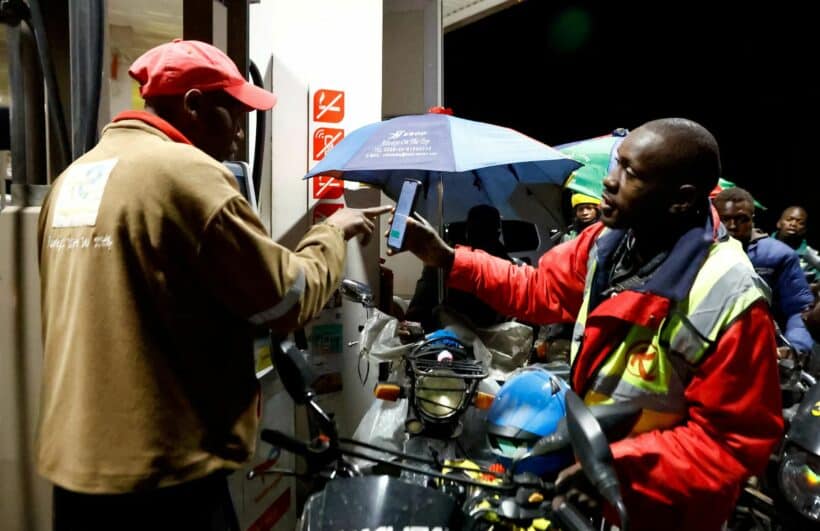
Kenya raised the maximum retail price of petrol by 6% and diesel by 4.5% for the cycle running from 15 October to 14 November, the Energy and Petroleum Regulatory Authority said, citing a sharp increase in the landed cost of imported fuel linked to the conflict in the Middle East.
In Nairobi, a litre of super petrol now costs KSh226.96, up KSh12.93, while diesel rises KSh9.90 to KSh227.76. Kerosene, used widely for cooking and lighting, jumped KSh28.49 to KSh219.87. The increases were announced on 14 October and took effect the following day.
The cost drivers
EPRA said the average landed cost of imported super petrol rose 11.81% between August and September, from $874.26 to $977.55 per cubic metre, while diesel rose 11.2% and kerosene 9.41%. Kenya imports all of its refined petroleum products, so global benchmark prices and the shilling-dollar exchange rate feed directly into local pump prices.
EPRA Director-General Edward Kinyua said September recorded the highest fuel import costs since the Middle East crisis began. The conflict has disrupted flows around the Strait of Hormuz, a chokepoint for a large share of the crude and refined products that reach East Africa.
Tax relief, but not enough to offset the rise
The government extended a reduction in value-added tax on petroleum products from the standard 16% to 8% until mid-January 2027, the third such extension since April. Parliament also passed the Tax Laws (Amendment) Bill, 2026, which would keep VAT on fuel at 8% for a further 90 days, with a possible extension.
The relief softened the pass-through but did not prevent the increase. Taxes and levies account for a substantial share of the pump price, a point industry players have raised as they question the domestic tax burden on fuel.
What it means for households and business
Higher pump prices ripple through the economy. Matatu operators have warned of fare increases, which would add to household transport costs. Kerosene users, often lower-income households, face the steepest percentage increase of the three products.
For businesses, diesel is a direct input into logistics, manufacturing and power generation, so the increase raises operating costs and could feed into consumer prices in the coming months. That complicates the inflation picture the central bank is watching as it weighs its next interest-rate move. The Central Bank of Kenya has held its benchmark rate at 8.75% for four consecutive meetings.
The outlook
The next price review is due on 14 November, and its outcome depends heavily on where global crude and refined-product benchmarks settle and on the shilling. A durable easing in Middle East supply risk would relieve the pressure; a further escalation in the Strait of Hormuz would tighten it again. Kenya's broader growth picture remains strong, with second-quarter GDP up 5.1%, but the fuel shock is a reminder of how exposed the economy is to imported energy costs.
Up next
Kenya's Economy Grows 5.1% in Q2 2026 as Transport and Services Power Output
Kenya's economy expanded 5.1% year on year in the second quarter of 2026, up from 4.9% a year earlier, led by transport, storage and service sectors.
More in Business
See all
Nigeria's Telcos Burn Over 40m Litres of Diesel Monthly as Solar Push Stalls
Nigerian telecom operators spend more than $350 million a year on diesel, consuming over 40 million litres monthly, while the switch to solar-hybrid power remains stuck at about a fifth of towers.

Power Minister Rules Out Electricity Tariff Increase, Targets 24-Hour Supply
Minister of Power Joseph Tegbe says there is no plan to raise electricity tariffs, insisting the focus is round-the-clock supply as the FG flags off 17.7MW of mini-grids in Oyo State.

CPPE Backs NNPC Petrol Discount but Rejects Return to Subsidy
The CPPE says NNPC's temporary petrol discount is a pragmatic response to a global energy shock, not a return to the subsidy regime it rejects.
About the author
Amaka Obi
Senior Business Reporter
Amaka Obi writes for BusinessPress.
More by Amaka Obi
NNPC Confirms Gas Pipeline Explosion in Rivers Community
Business3 hrs ago
DP World Backs $150 Million Dredging to Deepen Mozambique's Maputo Port
Business3 hrs ago
Ethiopia Opens $50 Million Gold Refinery in Domestic Processing Push
Business3 hrs ago