
Robusta Nears 2.5-Year Low as Vietnam Crop Builds and Sugar Slides Under $500
London robusta traded at $3,232 after last week’s $3,140 floor while white sugar fell to $499 as cheap oil flips Brazilian mills back toward sweetener output.
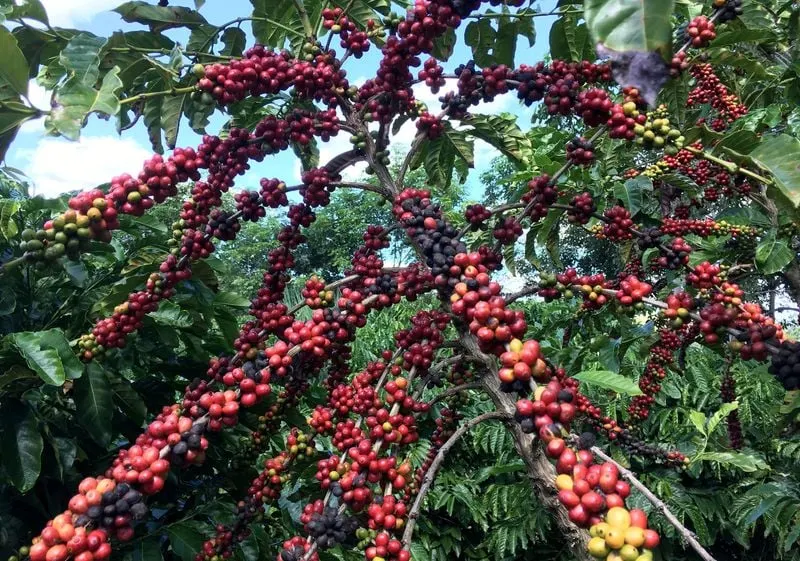
Robusta coffee slipped to $3,232 a tonne in Monday trading, within reach of the two-and-a-half-year low of $3,140 it plumbed last week, as the market prices in a healthy Vietnamese harvest that removes the supply deficit story that carried prices through 2025-2026 — while white sugar fell 0.2 per cent to $499 a tonne the same session, both soft commodities now trading against a falling-energy backdrop that reshapes mill and farmer economics.
The coffee market's turn has been structural. Vietnam produces the bulk of the world's robusta — the variety that feeds instant coffee and the lower price tiers of the espresso industry — and expectations of a strong 2026/27 crop have steadily unwound the shortage narrative that took robusta to record highs in the last two seasons. Arabica told the same story from the other end of the curve: up 0.3 per cent to $2.7005 a pound but recovering only from a one-month low of $2.6810 hit last week, with Brazil's harvest prospects keeping the arabica market's downside loaded.
The downward transmission to Africa's coffee belts
African producers — Uganda, Ethiopia, Kenya, Tanzania, Rwanda — export a blend of robusta and washed arabicas whose prices track the New York and London curves with grade differentials. For the robusta African belt, the two-and-a-half-year low is a revenue event: Uganda, the continent's largest robusta exporter, and the West African robusta states (Côte d'Ivoire, Cameroon) price their season against the London benchmark, and a $90-per-tonne slide moves their entire 2026/27 farm-gate arithmetic before a single agronomic factor applies.
Ethiopia and Kenya, the arabica specialists, sit in the same squeeze: arabica's month-low bottoming caps the washed coffee premium that carries the Kenyan auction system's reputation-based pricing and the Ethiopian exchange's grades. With global consumption growth flat for two seasons and the industry's inventories rebuilding, the continent's coffee receipts for 2027 are being set at levels that will make the sector's financing — input credits, extension services, wet-milling capacity — a harder fiscal ask precisely when the crop schedule needs reinvestment.
Sugar: the energy-switch spray
The sugar market's weakness is energy-driven arithmetic. White sugar at $499 a tonne reflects mills in Brazil — the world's largest producer — running elevated ethanol-to-sugar conversion ratios as crude oil's slide $(96-to-$98 Brent regime this week) has collapsed the energy-price incentive to divert cane into fuel. When oil was above $100 through autumn, cane mills maximised ethanol kiln-scheduling against sugar production; with Brent down 16 per cent in a week, the swing flips back toward sugar, mechanically raising sweetener supply just as seasonal deliveries peak.
Reuters' trade coverage of the week's close points to the December contract expiry as the next pressure point, with roughly 250,000 tonnes anticipated against delivery. African sugar markets — Nigeria's Sugar Master Plan corridors, Kenya's and Tanzania's import-dependency cycles — are then dealing with a world market that could supply the region cheaply just as domestic mill investment cycles have been re-evaluated around the higher energy-price upside. This is a familiar pattern for African sugar: world prices bottom, domestic mill upgrading and capacity maintenance get deferred, and the next world-price upcycle finds the local industry structurally short.
What the soft-complex says about the disinflation glidepath
The two commodities' slides are also a global-inflation read. Coffee and sugar are the two most commonly observed consumer-basket soft commodities; their world-price levels feed directly into the café-labour, retail and food-manufacturing cost lines across the developed world, and the soft-complex's 2026 turn suggests the food-inflation leg of global disinflation has running room into 2027. For the Federal Reserve and ECB, that underwrites the disinflation half of the December policy decision even as energy inflation does the opposite work — the split-echo of China's own price data this week, with factory-gate costs accelerating as consumer prices cool.
For African consumers, the near-term story is a small but real cost-of-living relief: imported instant-coffee brands, beverage-manufacturing inputs and sugar-dependent processing lines will price the softer world market through the coming quarters, easing the food-inflation component that dominated Nigeria's and the region's price data through 2025-2026 — the same vegetable-and-staple pressures that pushed onion prices up 162 per cent in a single year persist, but the imported-input leg of the food basket is turning.
The investment angle
Soft-commodity weakness is the setup for the next cycle. Vietnam-heavy robusta supply, Brazil-heavy sugar supply and the demand-frozen chocolate industry's cocoa demand are three separate signals of the same phenomenon — investment-starved planted-area economics — that produced the 2021-2024 soft-commodity bull runs. Producers facing a $3,232 robusta world will rationally defer replanting and fertilisation; and every deferred agronomic investment is a future supply inflexibility that the next global demand impulse will exploit. The lesson from the cocoa market's 2024 price spike — supply shocks arriving after years of demand-side growth — is the template that the coffee and sugar markets are currently writing their own version of.
Through the week, the direction of the soft-complex trade set: cocoa on the inventory overhang, coffee on the Vietnamese bumper, sugar on the energy flip — all pointing to a world-food complex that produces a piece of disinflation now while banking a supply risk for 2027-2028.
Up next
Dangote Refinery Petrol Exports Surpass Nigeria’s Daily Consumption
NMDPRA data show 54.63 million litres a day exported in September, up 37.3 per cent and above the 44.4 million litres of average domestic consumption.
More in Agriculture
See all
Cocoa Futures Stabilise Over Two-Year-High Inventories as Demand Wanes
London and New York bounced after one-month lows but a fourth straight weekly loss and 2.5-year-high exchange stocks keep the structural repricing intact.

Cocoa Exporters Lose N10-12bn to Lagos Port Delays, COPAN Warns
Six months of NPA approval bottlenecks plus Ondo labour costs doubling to N5,000-N6,000 a day have squeezed Nigeria’s second-biggest non-oil export earner.

FAO Food Price Index Slips on Weaker Import Demand
The FAO Food Price Index falls to 133.9 in October from 135.6 as cereal, dairy and meat ease on soft import demand, though prices remain 5.9% above a year ago.
About the author
Abena Ofori
Agribusiness Correspondent
Abena Ofori writes for BusinessPress.
More by Abena Ofori


