
Dangote Concedes Refinery IPO Missed the 10-Million-Investor Target
Orders of about N6.4 trillion lifted the raise to a near-triple oversubscription, but retail participation was capped by access and know-how, the chairman said.
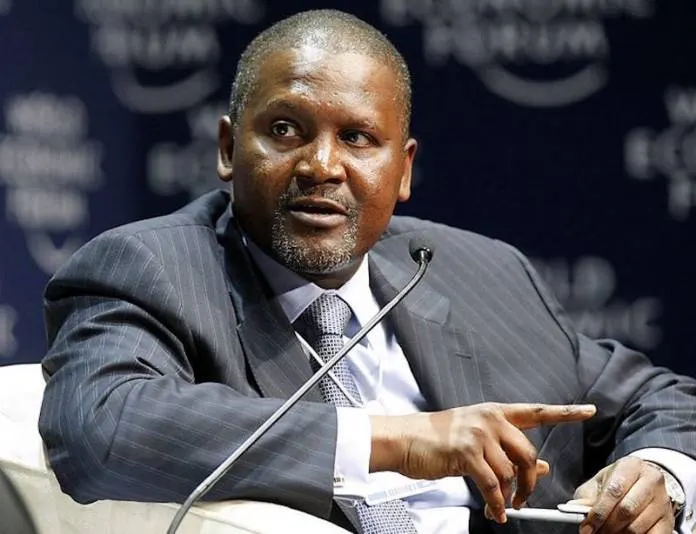
Aliko Dangote has admitted that the refinery IPO's mass-retail ambition — the promise of a listing in which as many as 10 million everyday Nigerians would own a piece of Africa's largest industrial project — fell short of the target, conceding at a weekend investor event that limited time and access "know-how" constrained retail participation in the historic N2.15 trillion raise.
Reuters and other agencies estimate the offering drew orders of roughly N6.4 trillion (about $4.78 billion) — near triple the base size and one of the largest corporate subscriptions ever recorded on an African exchange. But the retail dimension the offering had been celebrated for did not deliver at scale: Nigeria counts only about 6 million registered CSCS investor accounts in total, a practical ceiling the campaign's 10-million-investor goal could never realistically crack within the offer window, whatever the marketing intended.
What the shortfall actually measures
The distinction between money raised and participants counted is the whole story here. The raise was a triumph of institutional allocation: pension funds, insurers, banks and foreign portfolio investors took the offering up, and applications reportedly arrived from 120 countries, according to data reported by Caproasia. But the civic mission the offering was sold on — broadening the ownership base of Nigeria's corporate sector, the same "IPO for the people" strategy that made Aramco's 2019 listing a national story — produced a fraction of the participation record of 4.5 million retail subscribers Aramco registered.
The gap has structural causes, as Dangote's admission implies. Nigeria's securities account infrastructure has never extended deep beyond the banking and investing class; the e-offer platform's onboarding in the 10-day offer window demanded BVN linkage, a funded account and an appetite for a N260,000-plus minimum ticket at the offer price. For a mass-retail campaign aimed at the same households the new minimum pension guarantee is attempting to cover, "know-how" was always going to be the binding constraint — and Dangote named it himself.
The institutional machine behind the numbers
What the offer did prove is the institutional depth of the Nigerian market. The N6.4 trillion of orders — standing against a base programme that raised about $1.6 billion at a $48 billion valuation per Caproasia, with listing expected Dec 8, 2026 — came from an ecosystem that did not exist as a viable bid platform five years ago: pension AUM that has grown to N31.48 trillion, a treasury market that routinely absorbs multi-trillion-naira allocations, and investment banks and brokers able to run large-scale hybrid digital-plus-physical bookbuilding.
The IPO's oversubscription also tested operational infrastructure at unprecedented Nigerian scale, and the settlement mechanics will be scrutinised by the market's institutional side when allocation returns start processing through the CSCS in the run-up to the December listing date. Refinery-cash flows — the asset underpinning the offer — face their first public company's scrutiny: NMDPRA data show petrol exports of 54.63 million litres a day in September, a 37.3 per cent increase that pushed the plant's product sales beyond domestic consumption statistics, though the asset's true earnings rhythm through a subscribed books cycle is still to be seen.
The retail participation problem Nigeria needs to fix
The policy read-through is direct. If the country's largest industrial asset can't get retail reach anywhere near its ambition within a normal offer window, then the bottleneck is not one company's marketing — it is the investment-vehicle architecture between Nigerian households and the corporate sector. Kenya and South Africa manage retail-participation rates 5-to-10 times Nigeria's per capita; the difference is structural retail infrastructure: pre-funded sub-accounts, tax-advantaged first-share programmes, employer-linked offering rails and simpler identity-and-custody plumbing, none of which exists at useful scale in Nigeria's intermediation chain today.
The offshore channel — Kenya's capital markets regulator approved a short-form prospectus for a Global Depositary Receipt programme executed via Renaissance Capital Kenya, allowing Kenyan investors to participate — shows the direction Nigeria's own domestic architecture could take. A GDR module that lets foreign retail come in could easily be adapted for domestic retail once investor accounts are serialised the same way BVN serialises banking; the pieces are modern, they just weren't done for participating retail in the window the IPO ran.
What happens between now and the Dec 8 listing
The market now marks time to the Dec 8 listing, with three signals to watch. First, the final allocation pattern: how much of the N6.4 trillion order book is filled by the largest institutional tickets, and how the smallest allocations are sized — an early indicator of whether subsequent large listings institutionalize retail-set-aside mechanisms. Second, the listing-day print: whether the market values the asset at, above or below the N2.15 trillion base rate, and how the history of Nigerian first-day trading holds up liquidity. Third, whether the Securities and Exchange Commission and the NGX respond to the shortfall the way regulators in other markets have: with retail-set-aside rules, expanded CSCS onboarding and simplified nominee-custody structures for the next mega-issuer.
Dangote's candour — the admission itself is unusual in Nigerian corporate life — was interpreted by commentators as the founder shaping expectations ahead of the listing. But the fact that the constraint was access and know-how, not willingness or capital, points at exactly where the policy answers should go: onboarding, not incentives; rails, not advertising.
The refinery IPO will enter the record books on scale and oversubscription either way. The lasting effect will be decided by which lessons get institutionalised: if the 10-million-investor goal fails again on the next mega-offer, today's shortfall will look less like one company's missed marketing and more like a market infrastructure defect that Nigeria's regulators and exchanges failed to convert the country's largest-ever equity window of capacity-building appetite into genuine retail participation.
Up next
Yellow Card Buys Brazil’s GoMoney in First Acquisition for a Decade
The Nigerian-founded stablecoin payments company gains direct Brazilian operations with Pix collections and stablecoin settlement across the trade corridor.
More in Business
See allReps Panel Says Domestic Refineries Now Supply Over 75% of Nigeria's Petrol
The House Downstream Committee said domestic refineries supply more than 75% of national petrol with over 25 days of sufficiency, as it passed confidence votes on Tinubu, NMDPRA and Dangote and sought stronger pipeline funding.
FG Backs Plan to Give Students 10 Dangote Refinery IPO Shares Each
FG hails Aliko Dangote Foundation plan to give eligible tertiary students 10 Dangote Refinery IPO shares each, potentially reaching four million students.
Ethiopia Opens $50 Million Gold Refinery in Domestic Processing Push
Ethiopia launched its first gold refinery, a US$50 million joint venture, as Prime Minister Abiy Ahmed seeks to process more of the country's minerals at home.
About the author
Amaka Obi
Senior Business Reporter
Amaka Obi writes for BusinessPress.


