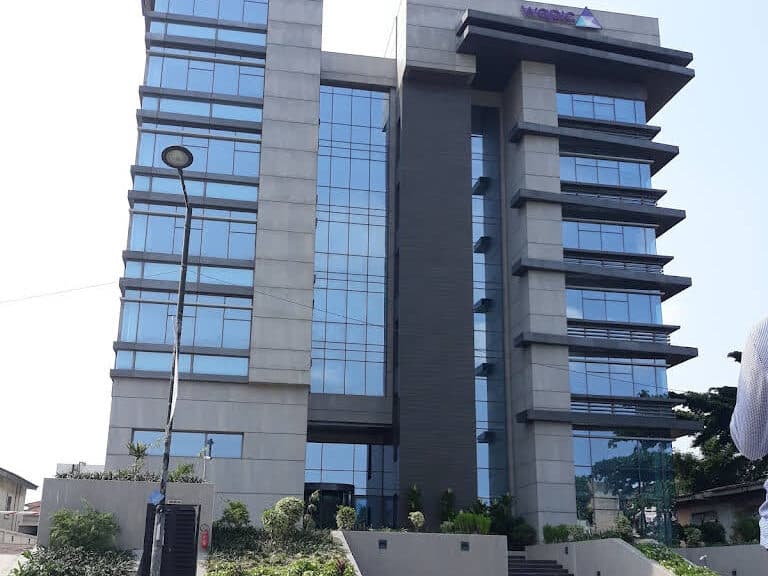
NSIA Prize for Agriculture crowns Come Again Foods, Protein Kapital, Tryctor as winners
The NSIA Prize for Agriculture has named Come Again Foods, Protein Kapital and Tryctor as winners, with $277,000 in cash awards and a Pula Xcelerator pathway worth about $1.5m in growth support.

Three Nigerian food ventures, Come Again Foods, Protein Kapital and Tryctor, have emerged winners of the NSIA Prize for Agriculture's latest cycle, taking home cash awards of $277,000 alongside a pooled pathway into the Pula Xcelerator programme worth about $1.5 million in additional growth support, according to reporting on the awards presentation published last week.
The Nigeria Sovereign Investment Authority's prize competition, launched to crowd commercial innovation into the country's most constrained food value chains, rewards startups that demonstrate working solutions in crop production inputs, processing and distribution. The three winners span the food system's layers, from food processing to agricultural inputs and financing, with Protein Kapital focused on protein value chains, Come Again Foods on processed food production and Tryctor building an agricultural financing and mechanisation platform for smallholders.
What the prize is designed to do
The NSIA Prize for Agriculture is structured as a competition that screens early- and growth-stage companies against commercial criteria, scale of impact on smallholder productivity, bankability and market traction, rather than as a conventional grant. Winners receive direct cash awards plus incubation support, and the Pula Xcelerator component adds structured support from Pula Advisers, the agricultural insurance and technology group founded by Thomas Njeru, which has expanded across African smallholder markets.
The logic is venture-style: rather than the government picking production targets, the sovereign wealth fund uses a competition to discover companies already achieving traction and directs growth capital so they can scale faster. The NSIA frame matters because the authority manages billions of dollars of sovereign capital and has made agriculture, which accounts for the largest share of Nigerian employment and drives food inflation, a stated focus of its domestic investment programming.
[irp]
Why these three sectors won
The winners' sectors reflect where Nigeria's food inflation problem bites deepest. Processed food companies such as Come Again Foods address the gap between farm output and shelf-ready products, a value chain where post-harvest losses remain significant and where stable prices depend on processing rather than on raw commodity markets. Protein businesses such as Protein Kapital target the most supply-constrained food category, where prices have grown fastest across most Nigerian consumer baskets in recent years.
Tryctor's platform approach, bundling financing and mechanisation for smallholders, addresses two of the biggest yields constraints in smallholder production, financing for inputs and access to mechanisation, both of which are chronically unavailable at scale. The prize money and Xcelerator resources give each venture a runway to expand beyond their current pilot footprints, with the NSIA's recognition also serving as a credibility signal for future commercial funders.
[irp]
The wider NSIA agricultural footprint
The prize joins a portfolio of NSIA agricultural programmes that also includes its co-investments in processing infrastructure, the President Agricultural Research Fund support for research institutions, and strategic stakes in fertiliser and fertiliser assets, including NSIA's position in the Presidential Fertiliser Initiative's supply chain. Collectively, the authority's domestic food investments have grown into one of the most significant sovereign-backed agricultural venture portfolios in sub-Saharan Africa.
The prize's timing matters, too. Domestic food inflation has been the central downside risk to household purchasing power through 2026, with September year-on-year food inflation reported at 19.59 per cent. Governments have layered several interventions this season, including dry-season farming programmes and guaranteed minimum price floors under the National Agricultural Land Development Authority and related initiatives, but Nigeria's structural food gap, from yield shortfalls to supply-chain losses, requires exactly the private-sector participation the prize is cultivating.
[irp]
What to watch
The test of the NSIA prize will be whether the three companies convert awards into scaled operating businesses. Metrics to track include Tryctor's expansion in mechanisation coverage and smallholder financing volume, Protein Kapital's capacity investments, and Come Again Foods' distribution growth, alongside the Xcelerator cohort's future fundraising, which will show whether other investors follow the NSIA's capital into the ventures.
For policy watchers, the prize also contributes a datapoint to the debate over how Nigeria mobilises private capital into agriculture: sovereign-backed competitions that reward demonstrated traction are an alternative to the older model of fertiliser distribution and input subsidy programmes, whose leaks and inefficiencies have historically absorbed large budgets with limited measurable productivity gain.
[irp]
Up next
Disco revenue up 666% in a decade while energy supply grew just 32%, new data show
Regulatory data show Nigeria distribution companies grew revenue collection about 666% over ten years while electricity supplied rose only 32%, a gap that frames the sector tariff and investment debate.
More in Agriculture
See all
NEC approves 90-day plan to cut food costs and ease living crisis
The short-term plan targets production, transport and market bottlenecks, but structural food insecurity will require longer-term investment.

Nigeria develops disease-resistant ginger to revive $730 million industry
New resistant planting materials could cut crop losses and lift exports, but commercial seed supply and processing gaps remain.
NAFDAC, agriculture ministry trade blame as unsafe food floods markets
Overlapping mandates and weak enforcement are allowing contaminated food into Nigerian markets, with serious health and economic costs.
About the author
Abena Ofori
Agribusiness Correspondent
Abena Ofori writes for BusinessPress.