NAFDAC, agriculture ministry trade blame as unsafe food floods markets
Overlapping mandates and weak enforcement are allowing contaminated food into Nigerian markets, with serious health and economic costs.
The federal agriculture ministry and the National Agency for Food and Drug Administration and Control are trading blame as unsafe food floods Nigerian markets, according to BusinessDay’s Toxic Food series. The dispute exposes a dangerous gap in the regulatory system that protects consumers and legitimate food businesses.
Unsafe food can contain pesticides, heavy metals, microbial contamination or unapproved additives. It causes illness, reduces productivity and can be fatal, especially for children and vulnerable adults.
The problem is not new, but its scale is alarming. Weak enforcement, fragmented regulation and poor traceability allow unsafe products to reach consumers through formal and informal channels.
Who is responsible?
NAFDAC is responsible for regulating food, drugs and cosmetics. It registers products, inspects facilities and enforces standards. The agriculture ministry is responsible for agricultural production, including the use of pesticides and veterinary drugs.
The overlap creates confusion. A food product may be regulated by NAFDAC at the point of sale, but the raw materials are regulated by the agriculture ministry. If standards are not aligned, unsafe inputs can enter the supply chain.
State governments also play a role through environmental health officers and market inspectors. Local governments regulate markets and slaughterhouses. The result is a multi-layered system with unclear accountability.
Why enforcement fails
Nigeria has good food safety laws on paper. Enforcement is the weak link. Inspectors are few, poorly funded and sometimes compromised. Laboratories are under-equipped, and testing is expensive.
Informal markets are difficult to monitor. Most food is sold through open markets, roadside stalls and small shops that are not registered. Tracking products from farm to plate is almost impossible.
Consumers also lack information. Labels are often missing or inaccurate, and few people understand food safety standards. Price competition encourages sellers to cut corners.
The economic cost
Foodborne illness imposes a heavy economic burden. It reduces productivity, increases healthcare costs and can damage export prospects. Countries that cannot guarantee food safety struggle to access premium markets.
Legitimate food businesses suffer too. When unsafe products enter the market, they undercut companies that follow the rules. That discourages investment in quality and safety.
A stronger regulatory system would benefit both consumers and producers. It would also improve Nigeria’s ability to export processed food, which is a key part of the diversification agenda.
What needs to change
The first step is to clarify responsibilities. NAFDAC, the agriculture ministry and state governments need a coordinated framework with clear lines of accountability.
Funding for inspections and laboratories must increase. Testing should be affordable and accessible, particularly for small producers. Digital traceability systems could help track products through the supply chain.
Consumer education is also important. People need to know how to identify safe food, how to store it and how to report problems. Retailers and market associations can play a role in enforcing standards.
The political dimension
Blame-shifting is easier than reform. Agencies may resist changes that reduce their turf or expose failures. Politicians may avoid tough enforcement that could alienate powerful interests.
But the cost of inaction is too high. Food safety is a public health issue, and it affects the country’s reputation as a place to do business.
A serious reform effort would require leadership from the presidency and cooperation across ministries. It would also need sustained funding, not just a one-off campaign.
The outlook
Nigeria’s food safety crisis will not be solved overnight. It requires investment, coordination and political will. The current blame game is a symptom of a system that is not working.
Consumers should be cautious, but they cannot solve the problem alone. The government must take responsibility for protecting them.
The Toxic Food series is a useful wake-up call. Whether it leads to action depends on whether policymakers are willing to move beyond finger-pointing and fix the underlying system.
Up next
Dangote Refinery extends IPO as African investor demand surges
The extension gives more investors time to participate in a landmark listing that tests African capital-market depth and refinery valuation.
More in Agriculture
See all
Fertiliser, Cocoa Lead Nigeria's Non-Oil Export Surge
Fertiliser has emerged as a top non-oil export earner alongside cocoa as Nigeria's industrial and agricultural shipments gain momentum in its diversification drive.
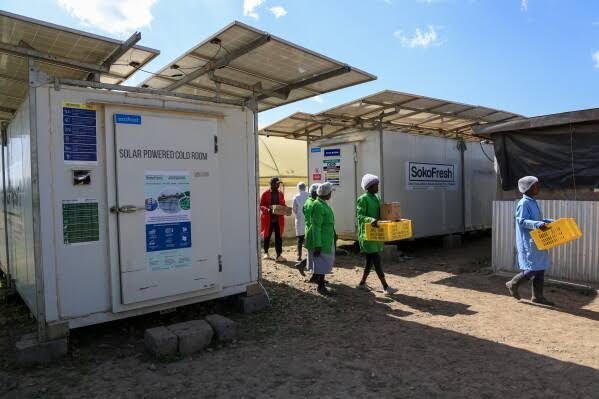
UK Clean Energy Fund Backs Solar Cold Storage for Nigerian Food Markets
More than £2 million from the UK's ZE-Gen Scale-up Fund will back ten African clean energy projects, including 100 solar cold storage units and four solar agricultural hubs in Nigeria.
WACOT Renews Edo State Fertiliser Partnership to Expand Input Supply
WACOT Limited has renewed its agreement with the Edo State Government on fertiliser production through the Edo State Fertilizer and Chemical Company, a partnership that began in 2017.
About the author
Abena Ofori
Agribusiness Correspondent
Abena Ofori writes for BusinessPress.