Mixed Reactions Trail FG’s Pump Price Discount at NNPC Filling Stations
Reactions have trailed the Federal Government’s introduction of a discounted pump price at NNPC Limited’s retail stations, New Telegraph reported on Tuesday, October 27, with consumers welcoming the relief while independents and analysts question the scheme’s structure and sustainability.
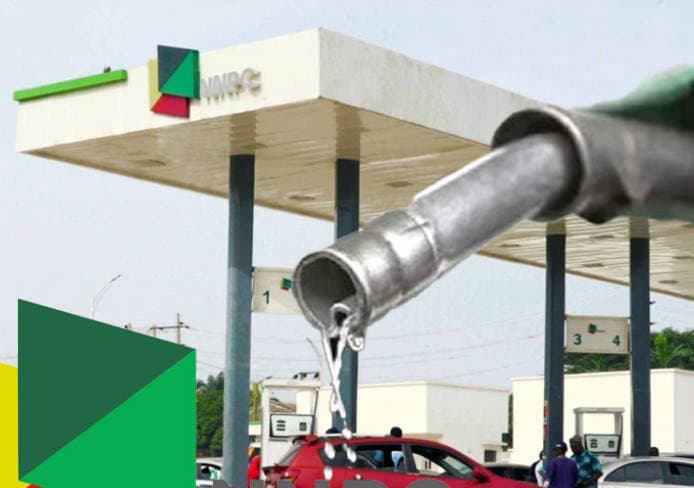
The Federal Government’s discount scheme on premium motor spirit (petrol) sold at NNPC Limited’s retail stations has drawn mixed reactions across the industry after its rollout, New Telegraph reported on Tuesday, October 27, 2026, in a review of stakeholder responses to the programme. The discount applies at the state-owned company’s branded outlets, creating a two-tier retail price map in which NNPC stations undercut competing private and independent marketers by design.
Supporters frame the scheme as a consumer-relief instrument in a market where pump prices have been hostage to crude’s 2026 volatility — WTI has swung around the $100-plus mark through October as the US-Iran conflict shaped energy flows — and where deregulation-era pricing passes global movements through to consumers with little smoothing. Motorists queueing at discounted outlets have treated the lower price as tangible cash relief in a year when food inflation, though moderating, still squeezes household budgets.
Critics, however, see a subtler problem. Discounts at the state retailer’s stations, funded through the state oil company’s margin, effectively re-introduce a selective price intervention into a market that was deregulated precisely to allocate product through market pricing. Independent marketers, whose stations far outnumber NNPC’s outlets nationwide, have long argued that such spread-distorting interventions push volume toward the state network and starve private stations of competitiveness, a distortion that can ultimately concentrate the market rather than widen choice.
[irp][irp][irp][irp][irp]
The Policy Question Behind the Price Gap
At stake is how the government reconciles two commitments that pull in opposite directions. The reform path was built on letting prices clear the market while transparently cushioning targeted households — the design that midwives fiscal savings of hundreds of billions of naira a year. A broad-brush retail discount at selected outlets runs against the grain of that design, even if it is cheaper than the old subsidy regime because it applies only at the state retailer’s stations and only to the extent the company absorbs the margin.
Analysts will be watching three effects. Whether NNPC’s discounted outlets actually lift volumes enough to matter for household spending relief, or whether supply constraints at those stations mediate most of the benefit. Whether private and DAPPMAN marketers respond by cutting their own prices, compressing the whole market or demanding matching treatment from authorities. And what the scheme does to the Federal Government’s subsidy-accounting — because price interventions historically reappear on the federation’s balance sheet even when they are structured as commercial discounts.
The Oil Price Context That Shapes It
The discount’s timing is no accident. Crude markets have spent the week repricing de-escalation hopes in the US-Iran conflict, with WTI sliding toward $101 a barrel on Monday as diplomatic missions visited Tehran. Marketers who bought product at last week’s crash-higher prices face landed cost maps that left pump prices sticky; NNPC’s discount cuts through that stickiness at selected stations, functioning as a public signal that the government wants retail prices resolving downward as global costs retreat.
Whether the scheme holds depends on the same variables. If oil dips further, the discount gets easier to sustain; if the conflict re-escalates and crude reprice higher, authorities will face the awkward optics of either withdrawing the discount or expanding a differential that independent marketers cannot match. Either way, the episode revives the industry’s oldest regulatory debate: how a deregulated market handles political pressure on price between reform milestones.
Up next
Gold Backs Above $4,000 While Bitcoin Steadies Near $80,000 After Rough Week
Gold recovered above the $4,000 an ounce level on Monday, October 26, closing near $4,031, while bitcoin steadied just under $80,000 at $79,786.67, after both assets had taken percentage-scale hits last week.
More in Economy
See all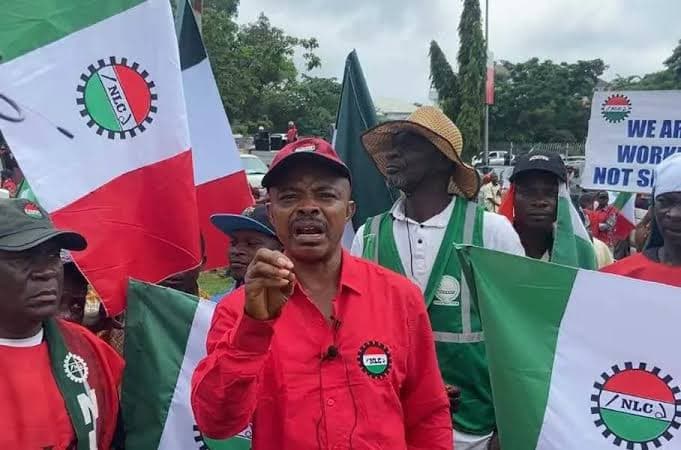
NLC Gives Federal Government Two-Week Ultimatum on Petrol Price, Minimum Wage
The Nigeria Labour Congress has given the federal government two weeks to address petrol prices and the minimum wage, warning of industrial action.

Rabiu Tells Economic Summit Firms Should Buy Dollars From the Market, Not CBN Allocations
Aliko Dangote, the Dangote Group’s president, told the 32nd Nigerian Economic Summit on Monday, October 26, that companies should buy foreign exchange through the market at prevailing rates instead of depending on direct Central Bank allocations, warning that naira availability alone does not solve machinery import needs.
NMDPRA Expands Gas Supply Access to Power and Fertiliser Plants Under New Network Code
The Nigerian Midstream and Downstream Petroleum Regulatory Authority has announced a new gas network code that widens third-party access to gas transportation infrastructure for power generation and fertiliser plants, in an aim to deepen domestic gas utilisation, THISDAY reported on October 26.
About the author
Tunde Balogun
Economics Correspondent
Tunde Balogun writes for BusinessPress.
More by Tunde Balogun
Cocoa Exports Surge 3,000% in Five Years as Weaker Naira Transforms Farm Trade
Agriculture4 mins ago
Shettima Says Nigeria’s Economy Is ‘Back on a Clear Path’
Economy48 mins ago
Tinubu Tells 32nd Economic Summit Government Is Rewriting Nation’s Story of Underperformance
Economy56 mins ago